Category: Small Business Tax

  • Threadline Wealth Spins Out of Baker Tilly as Independent RIA

    Threadline Wealth Spins Out of Baker Tilly as Independent RIA

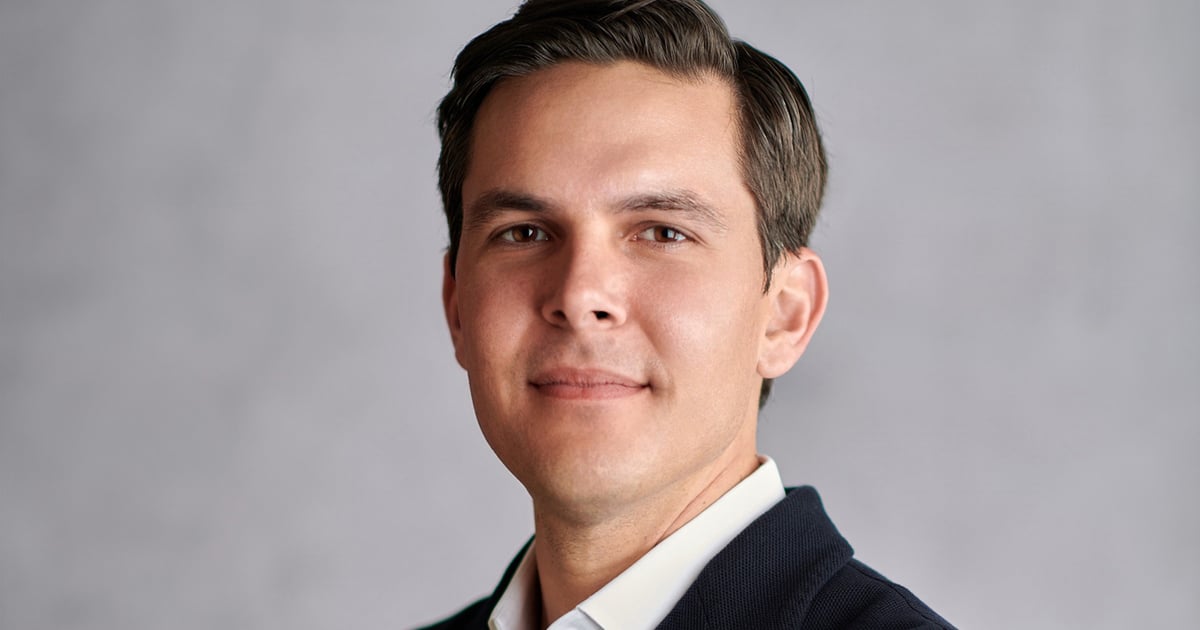
    Moss Adams Wealth Advisors, the wealth division of accounting firm Moss Adams that last year combined with Baker Tilly, has spun out to become an independent registered investment advisor with $5.8 billion in assets under management.

    The new firm, called Threadline Wealth, made the move with backing from co-owner The Cynosure Group and a group of employee owners that “more than doubles” the wealth division’s previous number of employee stakeholders, according to CEO and co-founder Justin Fisher.

    Eric Miles, who had been CEO of Moss Adams before the merger with Baker Tilly, remains CEO of Baker Tilly. As part of the merger of those two firms, private equity firms Hellman & Friedman and Valeas Capital, existing Baker Tilly stakeholders made additional investments, according to an announcement at the time.

    Fisher, formerly the private client group leader at Moss Adams, said the Seattle-based Threadline will maintain its current custodial and wealth technology platform in the liftoff, along with its tax strategy focus for high-net-worth families and business owners that includes a large client base in Silicon Valley.

    Related:Deals & Moves: $1B Maridea Lures LPL Team; $30B Waverly Expands in Washington

    “We’re working with owners, executives—folks that are going to need expertise from a large accounting and consulting firm,” he said. “We really recognized that we’ve got to be all in on wealth management from an operating model and from a technology standpoint in order to really serve those clients differently in three, four years from now and going forward.” 

    The wealth division of Moss Adams had been discussing the breakaway with Baker Tilly leadership for over a year, Fisher said. He said there was a mutual understanding that the wealth team’s work to provide clients with private investment options, as well as invest aggressively in technology and talent, would not do as well if it remained in the accounting firm. 

    “For us, it’s really about being free from the requirements so we don’t cause a safety problem with the accounting firm and still invest in the entire universe of private investments,” he said. “You’ll have Baker Tilly want to audit a company that we may want to invest client funds in—from an allocation standpoint, why have that friction there? How does that serve the clients better?” 

    Threadeline launches with 60 employees, about half of whom are advisors. The firm custodies with Charles Schwab and Fidelity Investments’ National Financial Services, according to its most recent Form ADV.

    New CEO Fisher sees Threadline as building on its accounting and tax roots. He said upper-high-net-worth clients, particularly business owners, founders and executives, have a growing need to combine their investing, tax strategy, liquidity planning and estate design under one roof.

    Related:$34B Allworth Launches Women’s Initiative

    “When you look at the balance sheet of executives, owners and high-net-worth families that have balance sheets that are in the federally taxable range and above, they have a whole lot of financial complexity that they’re trying to navigate,” he said. “I probably don’t go a day without talking to an owner about a tax strategy.” 

    Cynosure will hold seats on Threadline’s board and be a partner in shaping the business, Fisher said. 

    The wealth management industry investor, which also has its own RIA, has investments in large RIA platforms, including Steward Partners and Savant Wealth.

    In February, there was a similar tax-focused advisory breakout with a new firm called Aerodigm Wealth. That RIA launched in Portland, Ore., via a management buyout of accounting firm Delap LLP’s wealth division.

    In addition, large RIAs have been bulking up their tax strategy expertise in recent years, sometimes adding full tax accounting practices through acquisitions or partnering through various models. 

    In January, Merit Financial Advisors acquired SSC Wealth, the $260 million financial advice team of SSC CPAs + Advisors, while keeping a relationship with the parent firm. In late 2025, Moneco Advisors, a Fairfield, Conn.-based registered investment advisor with about $2 billion in client assets, completed a merger with Lichtenstein Financial and its affiliated tax firm, Lichtenstein Tax Consultants, which it acquired in 2023. 

    Related:Younger, Affluent Self-Directed Investors Are Warming Up to Working with Advisors

  • What’s in My Wealthstack: Caprock

    What’s in My Wealthstack: Caprock

    The most important thing about how we think about our technology stack is that we orient toward the advisor. It’s true that the person whose capital we are managing is the client, but the primary audience and most important user in my world is the advisor. They are part of why the client is here, and they are the force multiplier for the business. 

    We need to help create leverage for those advisors so that they can do what they do best for the client. There aren’t many people on earth who can stand in front of a family with $100 million in assets and get them to trust them with all of it. We’re making sure those people can spend as much time doing that work to give the best advice they can while feeling great about the tools they are using to do it.

    CRM: Microsoft Dynamics 365

    We use Microsoft Dynamics because it syncs with all our systems. We use it to help manage new business development, but have evolved our thinking when it comes to CRM.

    Related:Modern Wealth Management: A Tech Stack Built for M&A

    In the past, a CRM used to be a lot more about the client record, name, birth dates, mailing address and all that. Then it became a tool for marketing automation, meeting notes and document storage. When it came to working with the client, the CRM was always an extra step: after a meeting, you had to stop and enter notes so they could be appended to the record.

    Now, these features and functions are being used by various AI tools and agents. Instead of putting data into the CRM, it’s more automated. Because of AI, our entire Microsoft 365 tenant replaces a dedicated CRM system. It’s scraping Outlook, Teams messages, emails, meeting transcripts and client documents. It interacts with our Office 365 tools to gather all information about the client relationship, and then AI surfaces the next best steps or tasks for the advisor to evaluate. 

    Reporting & Portfolio Management: Addepar

    Addepar is still very much the category leader. That’s particularly true for alternatives and private investing. 

    It’s not inexpensive. And I’m a little surprised they have not built in some simple commodity functionality, such as a document library or vault for client documents. When it comes to alternative investments data management, Addepar is also expensive. But when you look at some of the other platforms in that category, the pricing model consistently makes it difficult for a multi-family office because they charge per position rather than per fund. Platforms like Canoe, Arch and others assume you are working as a single-family office. Though I do think with the help of AI, that it will get sorted out over time and they’ll evolve their pricing to where it makes more sense.

    Related:Private Advisor Group: An Open-Architecture Approach

    Trading & Rebalancing: Addepar

    It’s still relatively early in the product life for trading and rebalancing with Addepar, but things are going well so far, and it means one less provider for us, and the integration is valuable. 

    Financial Planning: Proprietary Tools, Envestnet | MoneyGuidePro

    We have built our own financial planning tools and have had various iterations over time. We also give advisors the option to use MoneyGuidePro. We’ve been trying to move away from our own proprietary tools, but most of what’s in this category is focused on retirement planning, which is not our primary use case. 

    We’ve looked at other options, but it’s just not the right fit yet. The Venn diagram is just a bit off for us in terms of the functions we need. Some parts we really like, and some just aren’t a fit. The biggest thing for us tends to be serving the UHNW clients with their life events. That’s not necessarily about saving for retirement, but more about managing 25% to 30% of the portfolio being in private investments. There are unique business logistics you need for that, especially around liquidity management, that are not built into those [other] financial planning tools. 

    Related:Summit Financial: A Wealthstack For All

    Document Management: Microsoft 365

    Copilot continues to evolve and help us leverage what we have in our Microsoft environment.

    Primary/Secondary Custodians: Fidelity, Schwab

    We are not pleased by recent changes that Fidelity made when it comes to long-short SMA strategies. Fortunately, we have options.

    AI Services: Microsoft Copilot

    We are using Copilot because it fits with our system. But we are very interested in Anthropic/Claude and their financial services offering, and what they are doing there. We’re also interested in the note-taking category. We love the functionality of Jump, Firefly and those other notetakers. But the gap between what already exists and what Microsoft is offering seems small, particularly as Microsoft is constantly rolling out new functionality. This is also a highly regulated industry, so we want to be comfortable about where the data is going to live. We are reluctant to add a new platform and a new place where data lives. 

    Direct Indexing and/or Tax-loss harvesting services: Canvas, Canopy, Quantinno

    We’ve been using Quantinno for a little over two years, and it’s incredibly useful. The biggest obstacle is how it interacts with our custodians to build the portfolio. Caprock was an early adopter in this category and we were disappointed when Fidelity changed its policy. The tools are great and unlock useful strategies we continue to use for Caprock clients. We’re just doing it elsewhere. 

    Trust & Estate Planning: Luminary, Vanilla

    We are using estate planning more and more with overall financial planning. The next layer for each client is not just what you own and the performance, but how you own it. Understanding the relationship (what is in the portfolio and what is in the trust, or the marital trust, and how to think about gifting) is critical. We love Luminary and so do our clients. The lines are starting to blur between what an estate planning tool is versus a financial planning tool. 

    As told to senior reporter Alex Ortolani and edited for length and clarity. The views and opinions are not representative of the views of Wealth Management.

    Want to tell us what’s in your wealthstack? Contact Alex Ortolani at [email protected].

  • Dan Zitting on Elevating Client Meetings

    Dan Zitting on Elevating Client Meetings

    Client meetings remain the heartbeat of the advisory relationship, but the expectations around them have never been higher. Advisors are under pressure to show up prepared, deliver deeply personalized guidance and answer increasingly complex questions on the spot, all while navigating a fragmented tech stack and rising client expectations shaped by artificial intelligence.

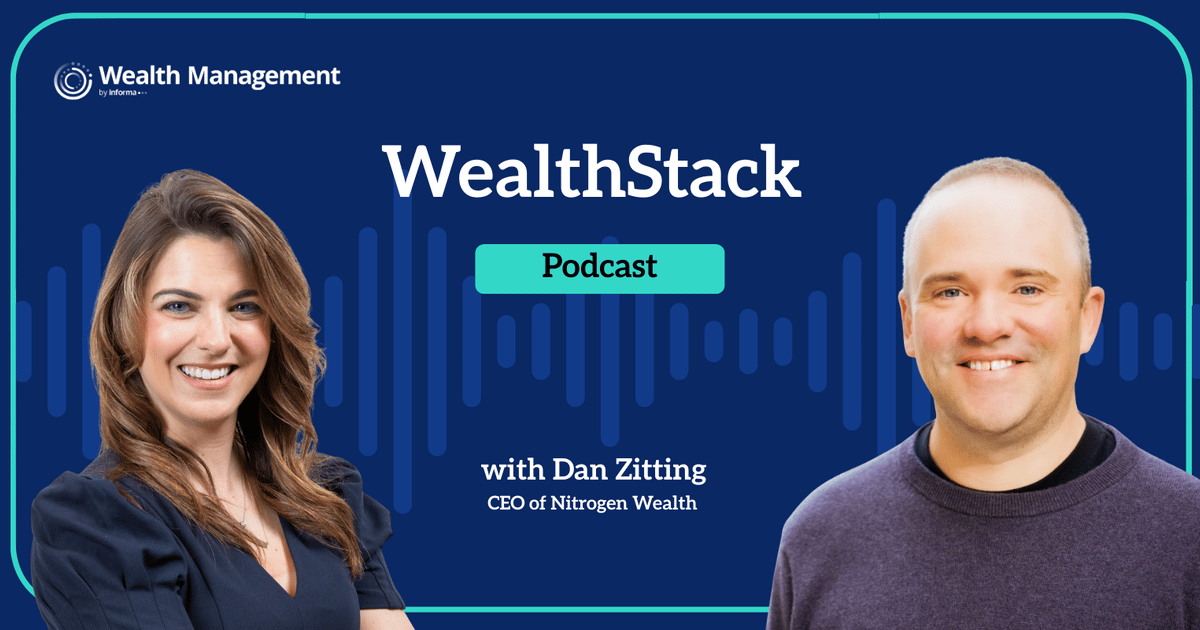
    In this episode of The WealthStack Podcast, host Shannon Rosic sits down with Nitrogen CEO Dan Zitting to unpack how technology is reshaping the before, during and after of client engagement. Fresh off Nitrogen’s Fearless Investing Summit, Zitting shares why the real opportunity in wealthtech isn’t replacing advisors with automation, but amplifying their expertise through connected workflows, compelling visuals and agentic AI.

    Key takeaways:

    • Why the client meeting is becoming the most important battleground for advisor value

    • How Nitrogen rebuilt its platform around its Nucleus AI engine to automate advisor workflows

    • Why tax conversations may spark the next generation of “catalyst moments” for clients

    • Why persuasive visuals can transform client understanding and engagement

    • How AI tools could help advisors manage larger client books while offering deeper planning insights

    Related:The WealthStack Podcast: Beyond the Model & Scaling Personalized Portfolios with Joshua Allen

    Resources:

    Connect with Shannon Rosic:

    Connect with Dan Zitting:

    About Our Guest:

    Nitrogen CEO Dan Zitting is a SaaS entrepreneur & operator, with a passion for software that enables a bold vision, especially one as bold as empowering the world to invest fearlessly. Prior to Nitrogen, Dan spent 13 years in enterprise SaaS for governance, risk management, and compliance (GRC). That journey started with founding Workpapers.com, the first true cloud software for audit & compliance management, which was acquired by Galvanize (then ACL) in late 2011. Then, leading Galvanize, Dan oversaw growth into the industry-recognized leader globally in GRC as recognized by analysts, investors, and (most importantly) customers alike. Galvanize was ultimately acquired by Diligent in a $1B transaction that created by far the world’s largest company in GRC software, a $650m+ revenue SaaS business serving 25,000 customers in 130+ countries. Dan’s lessons along the way have been published in Forbes, The Wall Street Journal, Bloomberg, Business Week, Reuters, The Street, CNBC, etc., as well as from the stage at hundreds of professional speaking events.

    Related:The WealthStack Podcast: Portfolio Personalization Without the Ops Headache with Wes Caywood

    Dan graduated with a BSBA in Information Systems and Finance from Colorado State University and received a Master of Accountancy from the University of Notre Dame. Dan believes his purpose is to challenge the planet’s organizations to maximize impact by operating with a conscience, and he’s found cloud software to be his best contribution to that personal mission.

  • Google Finance Adds Prediction Market Data

    Google Finance Adds Prediction Market Data

    Google Finance now displays prediction market data alongside traditional market information. This integration from Kalshi and Polymarket represents the first mainstream placement of event contract data in a widely accessible financial platform.

    What Prediction Market Data Provides

    Prediction markets generate probabilities for specific events through participant trading. A contract at 65 cents implies a 65% probability. These markets cover Federal Reserve rate decisions, inflation releases, GDP outcomes, and regulatory actions that drive portfolio positioning.

    The value lies in aggregating expectations of thousands of participants risking actual capital. According to PYMNTS coverage, the platform incorporates data from Kalshi, a CFTC-regulated exchange, and Polymarket. These probabilities update continuously as new information becomes available, providing insight into how the market interprets events in real time.

    Related:The Hidden Problem with Style Investing

    The Integration Advantage

    Having prediction market data alongside traditional market data creates a more complete intelligence picture without requiring separate accounts or subscriptions.

    A scenario where your investment committee believes the Federal Reserve will cut rates by 50 basis points. You see prediction markets assign only 30% probability to that outcome, with 60% assigned to 25 basis points. Your team should investigate that difference to drive their own conclusions.

    CIOs can reference market-implied probabilities in client communications, framing internal forecasts against broader market expectations. Research teams benefit from identifying divergences as research catalysts.

    Practical Applications

    The natural language interface allows queries combining traditional and prediction market data. Portfolio managers can ask “How have technology stocks performed when prediction markets showed rising inflation expectations?” Research teams can analyze historical correlations between market-implied probabilities and asset performance.

    Scenario analysis becomes more rigorous when anchored to market-implied probabilities rather than arbitrary assumptions. Client conversations benefit when advisors can show what the market expects rather than offering personal speculation.

    Understanding the Limitations

    Prediction markets reflect limited liquidity compared to traditional markets. Concentrated positions can influence probabilities, especially for niche events. Market-implied probabilities represent betting odds, not statistical forecasts. A 65% probability means current market participants collectively assess the likelihood at 65% based on available information. These assessments can be wrong.

    Related:Triad Wealth CIO: We Want to Introduce More Cyclicality in Our Models

    According to PYMNTS, participation volumes remain relatively small compared with major exchanges. Price movements can be influenced by limited liquidity or concentrated bets. While prediction markets capture near-term sentiment effectively, they may overstate volatility during uncertainty.

    Volume matters when interpreting prediction market data. Kalshi markets with deep liquidity provide more reliable signals than thin markets on Polymarket with limited trading activity. Investment teams should evaluate market depth before incorporating probabilities into analysis.

    These markets should serve as supplementary intelligence rather than primary forecasting tools. Cross-reference prediction market probabilities with traditional analysis, derivatives market pricing, and other information sources.

    Strategic Context for Wealth Management Firms

    This development accelerates institutional awareness of prediction markets as legitimate information sources. Two years ago, prediction markets existed primarily in academic discussions. Today, they appear in Google Finance alongside stock quotes and bond yields. That transition from obscurity to mainstream visibility matters.

    Related:OnePoint BFG CIO: It’s Not Too Late to Invest in Commodities

    Clients increasingly encounter prediction market narratives through financial media. When CNBC discusses what prediction markets say about Federal Reserve decisions, advisors must be prepared to discuss what these markets mean and how they work.

    Wealth managers who understand how to interpret event contracts gain an information advantage. This knowledge allows them to contextualize client questions, evaluate media narratives, and incorporate an additional intelligence source into investment analysis.

    Early adopters develop institutional knowledge before the broader industry makes this transition. That knowledge includes understanding which prediction markets provide reliable signals, how to interpret probability shifts, and when divergences require investigation.

    Making Prediction Markets Actionable

    Wealth management firms should approach this in stages. First, research teams should become familiar with how prediction markets function and what data Google Finance provides. This requires no policy changes, just internal education.

    Second, incorporate market-implied probabilities into investment committee discussions as contextual information. When debating macroeconomic scenarios, reference what prediction markets expect. This adds an empirical benchmark to strategic conversations.

    Third, evaluate whether prediction market data might inform tactical positioning decisions. Some firms may find value in comparing internal forecasts against market expectations and adjusting exposure when divergences become extreme.

    The goal is not for firms to embrace prediction markets as primary investment tools. The goal is to understand how these markets change client behavior and information flow, and to equip advisors with knowledge required to respond. Advisors who understand this shift will remain relevant with clients who increasingly encounter these markets through mainstream channels.

    Firms that dismiss prediction markets as novelty risk falling behind in information gathering capabilities. The accessibility through Google Finance removes friction that previously limited institutional engagement. Investment teams can now incorporate event-based probability data into research workflows without building separate infrastructure or subscribing to specialized platforms. That accessibility changes what’s possible at zero marginal cost.

  • Flourish Launches Mortgage Platform for Advisors

    Flourish Launches Mortgage Platform for Advisors

    Flourish, a technology platform serving registered investment advisors, perhaps best known for its cash management features, has launched Flourish Lending, a residential mortgage product designed to help independent advisors compete with banks and wirehouses that use mortgage rate incentives to attract clients.

    The platform operates as a digital-first mortgage broker, providing clients access to rates directly from capital markets and supporting refinancing, cash-out refinancing and new home purchase loans of up to $10 million for primary and investment properties.

    In 2025, Flourish acquired the AI-powered liability analytics startup Sora Finance as part of its efforts to build out lending services for clients.

    “For years, advisors have told us they lose assets to wirehouses and banks when clients need a mortgage,” said Max Lane, chief executive officer of Flourish.

    The solution offers advisors a co-branded lending experience with features such as proactive refinance alerts, a streamlined application process, and rapid closings.

    Related:AI-Powered Era Registers as RIA, Targets Mass Affluent

    “Lending has long been one of the biggest structural advantages banks and wirehouses hold over independent advisors,” said Dani Fava, chief strategy officer at Carson Group. “When clients need mortgages or refinancing, advisors often have limited ways to help, which can lead to assets leaving the advisory relationship.”

    Flourish Lending is currently licensed in over 20 states, covering more than half the U.S. population, and expects nationwide availability within 12 months.

    Flourish reports that it works with more than 1,100 RIAs managing over $2.6 trillion in assets.

    Subatomic Rolls Out AI Chief of Staff for RIAs

    Subatomic has launched Concierge, an agentic AI system that functions as a chief of staff directing specialized AI workers across a wealth management firm’s operations.

    Concierge operates as a firm-specific AI layer that manages multi-step workflows across connected systems, routing work to human and AI workers for tasks such as meeting prep, data synchronization, client follow-up and compliance documentation, without requiring human oversight at each handoff.

    The system allows advisors and staff to interact through chat, Slack, email or voice, operating within each firm’s environment with data remaining in their systems.

    Subatomic builds a unified data layer called Subatomic IQ before deploying the Concierge, connecting CRM platforms, custodial feeds, planning tools, document repositories and compliance systems.

    The Concierge directs five specialized AI workers: Advisor Intelligence, which synthesizes client profiles before conversations; Meeting Preparation, which collects client data and portfolio changes; Client Follow-Up, which drafts summaries and updates CRM systems; Data Operations, which synchronizes custodial and CRM data; and Documentation and Compliance Lens, which automates form completion and produces audit trails.

    Related:Goldman Sachs Invests $42.5M in GeoWealth

    At a $1.4 billion AUM RIA, the system helped reclaim more than 8,000 hours annually, delivering over $500,000 in operational value equivalent to four full-time employees in year one, according to Subatomic.

    Subatomic confirmed the deployment of its 50th AI worker across its client base, each customized to firm-specific standards.

    Nitrogen Earns ISO 42001 Certification for AI Governance

    Advisor technology platform Nitrogen has achieved ISO/IEC 42001 certification, the international standard for Artificial Intelligence Management Systems, becoming what the company believes is the first wealthtech company to earn the certification. 

    Created in 2023, the certification has been granted to only a handful of large providers, including IBM and Google Cloud’s AI services, for example, as well as a handful of smaller firms in the financial services space. 

    ISO/IEC 42001 provides requirements for how organizations govern, deploy and oversee AI systems. Certification is awarded following an independent third-party audit confirming that a company has implemented formal processes for AI governance, risk management, ethical safeguards and ongoing oversight.

    “AI is rapidly becoming foundational to financial advice technology, but trust and governance must come first,” said Dan Zitting, chief executive officer at Nitrogen. “ISO 42001 certification demonstrates that our AI systems are not only powerful but responsibly built, carefully governed, and continuously monitored. Advisors operate in a regulated world, and when compliance teams ask how our AI is managed, we can now provide independently audited proof.”

    The certification reinforces the governance framework behind Nucleus, Nitrogen’s AI-powered advisor empowerment engine embedded directly within individual client profiles. Rather than operating as a standalone chatbot, Nucleus acts as a task-execution assistant inside the Nitrogen platform, allowing advisors to translate brokerage statements into portfolios, turn tax documents into client deliverables, apply security screens with natural language prompts, translate meetings into notes, prepare retirement income maps and generate client reports for download, print or email delivery.

    Zocks Brings AI Assistant to Life Insurance Market

    Zocks, the AI assistant already familiar to financial advisors, has launched AI-automated operational and document intelligence capabilities for the life insurance market and is already in use exclusively at two of the three largest U.S. life insurance carriers.

    The platform captures and creates notes on household, financial and life details during discovery meetings, then automatically completes paperwork, including carrier applications, fact finders and client intake forms. According to the company documentation, any format is processed in less than 60 seconds and synced to applications and forms.

    “Life insurance professionals face a unique combination of high meeting volume, complex documentation requirements, and thin margins for error,” said Mark Gilbert, chief executive officer of Zocks. “The firms that win in this competitive market are using AI to remove friction at every step, from the first meeting to the issued policy to client retention.”

    Zocks automatically syncs client information from meetings and documents to customer relationship management systems, illustration and other planning tools. The platform extracts client details required for needs analysis, suitability, case design and administrative work, reducing underwriting delays and “Not In Good Order” cycles.

    The platform also automates meeting preparation, follow-up emails and client communications, identifies missing items, schedules exams, confirms beneficiaries, establishes delivery requirements, and sets up payments.

    WealthFeed Launches “Warm Introduction” Feature 

    Prospecting and lead-generation platform WealthFeed has launched its Warm Introduction feature set, designed to help advisors identify prospects connected through their existing networks within a database of more than 100 million profiles.

    The enhancement to WealthFeed’s Discover feature uses AI to layer network intelligence onto prospecting outreach, solving the time-consuming challenge of manually identifying second-degree connections across large prospect databases.

    “With WealthFeed, advisors can now ask, ‘Who do I know that could introduce me to high-opportunity prospects?’” said Sam Kendree, co-founder and president of WealthFeed.

    Advisors can now find prospects reachable through mutual connections, identify second-degree relationships layered on prospect data, and search their clients’ and connections’ networks for individuals they want to meet.

    The Warm Introduction feature is layered on top of WealthFeed’s Discover feature, which offers professional- and consumer-level data, net worth and income modeling, money-in-motion signals, including promotions and business sales, advanced filtering by net worth and job title, and validated contact information.

    WealthFeed combines prospect identification, enrichment, monitoring, marketing automation and CRM activation under a pay-as-you-go pricing model, with integrations available for Redtail, Salesforce, Wealthbox and Hubspot.

    The prospecting and lead generation space for advisors is becoming increasingly competitive, with several startups vying to introduce new AI-driven matching capabilities, including Cashmere, Catchlight, FINNY, Aidentified, and at the more enterprise end of the spectrum Datalign Advisory, among others.


  • John Lefferts Leaves Cetera After Less Than a Year

    John Lefferts Leaves Cetera After Less Than a Year

    John Lefferts, who was hired by Cetera Financial Group less than a year ago to lead its supported independence division, has moved on from the role this week, he confirmed. He said he would be taking some time off to reflect and explore his next move.  

    Lefferts took over as head of Cetera Investors last April after about six years at Equitable Advisors, where he was a managing director and national head of business development. 

    At Cetera, he was tasked with working with the firm’s branch managers, advisors and their firms on operations, technology and marketing. He led a network of regional growth teams and 40 branch offices.

    Lefferts said he left because he realized the role was not the best fit given his background and skill set. 

    “We simply realized that my vision for my role did not align with Cetera’s vision for the role,” he said. “I wish Cetera Investors and Cetera Financial Group all the best, and I do believe in what [CEO] Mike Durbin is building.”

    Related:Raymond James Goes With Internal Hire to Lead Independent Contractor Division

    “I’m sincerely grateful for the opportunity to work with such a talented team,” he wrote on LinkedIn. “What I know with even greater clarity now is this: I’m energized by building and scaling high-performing wealth management businesses. I’m particularly drawn to opportunities that combine sophisticated advice for high-net-worth clients, advisor development and leadership, and the creation of real, sustainable enterprise value—especially where technology and innovation are reshaping the client and advisor experience.”
    A Cetera spokeswoman did not return a request for comment prior to publication.

    This follows news Thursday that Cetera added Cunningham Financial Group, a firm near Birmingham, Ala., with about $200 million in assets under administration, which is affiliated with Summit Financial Networks. The team, led by advisor Jonathan Cunningham, joins from Ameriprise Financial. 

    In January, Matt Fries, who had been at Cetera for the last 10 years, left the firm, according to regulatory filings. Fries, who most recently served as head of investment products and partner solutions, exited the company voluntarily. He joined Inland Real Estate Investment Corp., a real estate investment manager, as CEO and president. 

    Also in January, Cetera announced that Tom Gooley would retire from his position as chief operating officer at the end of the first quarter. 

    Cetera currently has about 12,000 advisors across its various channels. They collectively oversee more than $640 billion in assets under administration and $294 billion in assets under management.

    Related:Edward Jones Ups Advisor Headcount in 2025 While Trimming Home Office Staff

  • Dimensional Launches ETF Share Class Mimicking Vangaurd

    Dimensional Launches ETF Share Class Mimicking Vangaurd

    (Bloomberg) — Dimensional Fund Advisors is becoming the first asset manager to launch an exchange-traded fund share class of a mutual fund since Vanguard Group’s patent on the model expired nearly three years ago. 

    The actively managed Dimensional US Micro Cap ETF begins trading on Friday under the ticker DFMC, Dimensional said in a statement. DFMC is a share class of the company’s US Micro Cap Portfolio, which has existed as a mutual fund since 1981. 

    With Friday’s launch, Dimensional is the first to successfully mimic Vanguard’s fund blueprint since the Securities and Exchange Commission gave its blessing to the move last September. In creating an ETF as a share class of an existing mutual fund, the former vehicle’s tax efficiency is effectively being ported over to the latter. 

    The model was cheered by SEC Chair Paul Atkins, who wrote in an opinion piece in the Washington Post last month that it would extend “a major tax break to millions of people investing to build wealth” because the ETF won’t be exposed to the capital-gains tax liability that mutual-fund shareholders face when assets are sold off to meet redemptions.

    Related:11 Investment Must Reads for This Week (March 17, 2026)

    It’s a potentially significant shift for the asset-management industry, which has seen trillions of dollars drain from mutual funds in favor of ETFs over the past decade. 

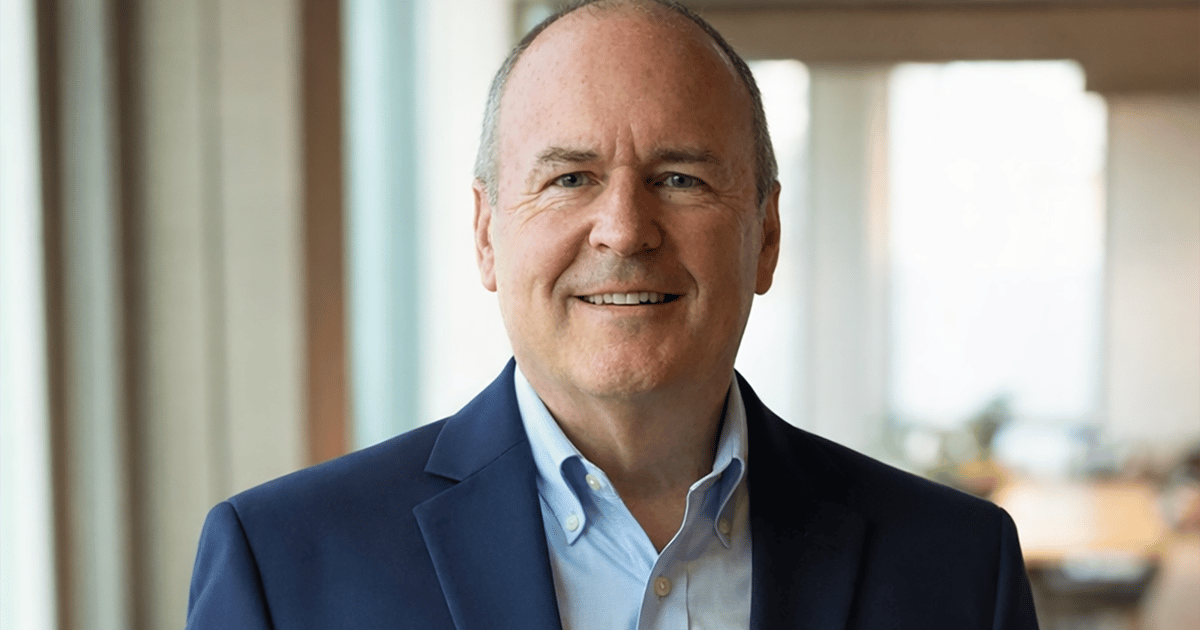
    “We designed this fund for institutional investors at a time when they were concerned about being overly concentrated in US large caps — that was 45 years ago, so in some ways, history repeats itself,” Joel Schneider, the firm’s deputy head of portfolio management for North America, said in a phone interview. “We now have an ETF share class with a 45-year track record.”

    The fund design was pioneered by Vanguard, who enjoyed its exclusive use for nearly two decades before its patent expired in May 2023. Dimensional is the first in a potentially long line of issuers waiting in the wings after the SEC granted exemptive relief to dozens of firms including BlackRock, JPMorgan, Fidelity and State Street in December. 

    While some anticipate that the introduction of multi-share classes could usher in thousands of new ETFs, operational hurdles remain. Industry watchers have warned that an en-masse deluge of ETF share class launches could present new challenges for the market, with RBC Capital Markets cautioning that market maker’s balance sheets could be “constrained” by a surge in new issues.

    Still, Dimensional is focused on using the fund blueprint at “a very large scale,” according to Schneider. 

    Related:Oil Shocks Compared: Impact on ETFs from Ukraine, Iran Conflicts

    “Dimensional is continuing to take feedback from our investors, from financial advisors, to shape which strategies to bring to the share class wrapper next,” Schneider said. “So while we may have grand ambitions to bring all of them, I think it will be driven a lot by what clients are asking for.”

  • Maridea Adds LPL Team, Waverly Buys in Washington

    Maridea Adds LPL Team, Waverly Buys in Washington

    Maridea Expands in Phoenix With LPL Team

    Maridea Wealth Management acquired Chichester Financial Group, a Phoenix-based advisory firm that had been with LPL Financial. 

    The move expands acquisitive Maridea’s presence in the region to two offices, following the establishment of its initial Phoenix location in September 2025. 

    John Chichester Jr., founder of CFG, will join Maridea as a senior financial planner with a specialty in tax-focused financial planning. He is joined by Stephanie Bawolek, director of financial planning, and three other staff members. 

    “Maridea’s high-growth trajectory, entrepreneurial culture, and long-term vision were key factors that attracted my team and me to this partnership,” Chichester said in a statement.

    CFG brings retirement plan expertise, including 401(k) plan design for business owners, participant education and tax-efficient retirement strategies.

    The Brooklyn-based Maridea has grown to about $1 billion in assets under management, seven offices, and 40 staff since launching in 2023. In May of 2025, it sold a minority stake to 119th Street Capital and Pelican Capital to fund acquisitions and partnerships.

    Related:$5.8B Wealth Unit Spins Out from Baker Tilly

    Waverly Advisors Snags $181M RIA in Washington

    Waverly Advisors acquired McBride Financial Advisors, a Seahurst, Wash.-based firm with $181M in AUM. 

    Founded by Michael McBride, the firm offers financial, retirement and estate and trust planning, with options to implement tax and philanthropic strategies. McBride will join Waverly as a wealth advisor. 

    The deal is Waverly’s second Pacific Northwest transaction this year, and the Birmingham, Ala.-based RIA’s 31st acquisition since selling a minority stake to Wealth Partners Capital Group and HGGC’s Aspire Holdings platform in December 2021.

    Waverly oversees about $30.6 billion in client assets out of 46 offices. Its advisors are focused on high-net-worth individuals, corporate retirement plans and institutional clients.

    Carson Group Adds Agrillo Financial Group on Long Island

    Carson Group continues its active 2026 with the acquisition of Agrillo Financial Group, a Bethpage, N.Y.-based practice serving approximately $160 million in advisory and retirement plan assets, as a new independent office. Agrillo had been a partner of the Pinnacle Financial Group.

    Theodore “Ted” Agrillo III leads the practice as a wealth advisor, while his mother, Katherine “Dee” Agrillo, who founded the firm in the mid-1990s, continues to work there. The practice primarily serves individuals, families and small business owners, with a focus on women, widows and pre-retirees.

    Related:$34B Allworth Launches Women’s Initiative

    “As we reached capacity with our existing tools, it became clear that if we wanted to continue serving clients at the level they deserve and grow the right way, we needed a partner that has the right technology, investment platform and operational support already in place,” Agrillo said in a statement. 

    The firm plans to expand the team over time, including adding junior advisors and support staff.

    Overland Park, Kan.-based Carson Group manages over $57 billion in AUM and has a minority investment from Bain Capital.

    The Finance Couple Leaves LPL for Osaic’s Innovative Financial Group

    The Finance Couple, a Greenville, S.C.-based advisory firm founded by husband-and-wife team Tim Curran and Wynne Curran, has joined independent broker/dealer Osaic through its office of supervisory jurisdiction, Innovative Financial Group. The couple brings $204 million in client assets from its former IBD, LPL Financial.

    The firm specializes in financial planning and asset management for couples and women approaching or in retirement. 

    They evaluated several firms before choosing Osaic, according to the announcement.

    “Our focus has always been on comprehensive financial planning combined with common-sense asset management for the betterment of our clients; Innovative Financial Group and Osaic stood out as true partners who will provide the technology and support we need to grow, while helping us maintain our strict focus on our clients,” Tim Curran said in a statement.

    Related:Younger, Affluent Self-Directed Investors Are Warming Up to Working with Advisors

    RBC Wealth Acquires $360M Team from Morgan Stanley

    RBC Wealth Management added the Turnock Bonacci Group to its Annapolis, Md., branch, bringing nearly $360 million in client assets from Morgan Stanley.

    The team includes Kevin Turnock, managing director and financial advisor; Anthony Bonacci, senior vice president and financial advisor; Michael Norris, senior business associate; and Julia Harrison, investment associate. The group specializes in wealth planning for ultra-high-net-worth clients.

    The team addresses complex wealth challenges, from multi-generational strategy and business transitions to portfolio management.

    RBC Wealth CEO Neil McLaughlin recently outlined to Wealth Management the firm’s growth strategy, which includes doubling the U.S. wealth business over the medium term and adding 600 advisors by 2029. 

  • Staffing Defines DC Advisory Firm Success

    Staffing Defines DC Advisory Firm Success

    The defining challenge for DC specialists and hybrid advisory firms today is not product innovation or market volatility. It is people. Fee compression continues to place pressure on advisory businesses, and client expectations expand. Thus, staffing, scalability, and succession planning have moved from operational concerns to strategic imperatives.

    The economics of the retirement plan advisory business make the case. Firms with the strongest emphasis on retirement plan growth operate with the largest average teams but report lower average gross margins (41%) than wealth-focused practices, which typically maintain smaller teams, enjoy higher margins (51%) and place far less emphasis on growing their retirement practices. The message is clear: growth in the retirement advisory business is staffing-intensive, and scale requires infrastructure.

    Scalability Is a Strategic Choice

    Further, DC advisor margins compress as plan size increases. Smaller plans generate margins near 55% to 60%, while plans over $100 million are considerably lower. Larger mandates drive revenue, but they demand more service and tighter execution. Attempting to grow without expanding internal capacity leads to service strain and stalled momentum.

    Related:401(k) Real Talk Episode 184: March 18, 2026

    Scale is therefore not solely about accumulating more plans. It is about building organizational depth.

    Nearly half of DC-focused advisors (46%) report adding staff, and 50% are investing in technology to enhance efficiency. Technology improves workflows, but people create leverage. Relationship managers, investment specialists and participant engagement advisors allow lead advisors to focus on business development rather than administration. Without adequate staffing, even the strongest growth pipeline erodes margins.

    Hybrid firms face the most complex challenge. They are scaling retirement plans while expanding wealth management capabilities. Convergence offers economic upside, but without disciplined hiring and role clarity, it can overwhelm the organization.

    Diversification Strengthens the Model

    Firms that combine retirement advisory with wealth management tend to outperform retirement-only practices. Diversification helps offset fee pressure in the defined contribution market while creating more stable and durable revenue streams. But convergence also raises the bar for advisory capabilities.

    Scalable firms must convert plan sponsor relationships into participant-level wealth opportunities while simultaneously delivering sophisticated financial planning, insurance guidance and ongoing advice. At the same time, they must maintain fiduciary discipline and technical expertise in retirement plan consulting.

    Related:How the 401(k) Industry Needs to Adjust to Phased Retirement

    These capabilities rarely reside in a single advisor. They are most effectively delivered through a coordinated team.

    Hiring younger advisors, therefore, is not solely about preparing for ownership transition. It is about expanding the firm’s capabilities. Early-career professionals can be trained across both retirement and wealth disciplines, creating a talent pipeline that supports firm growth and ensures continuity across the client lifecycle.

    Succession planning, in this context, becomes an organizational process rather than a transaction. Effective firms approach succession as a multi-year effort that includes gradual client handoffs, shared meeting leadership, structured mentoring and processes that institutionalize client knowledge.

    Firms that delay this work risk more than leadership disruption. Without a deliberate succession strategy, both retirement consulting relationships and participant-level wealth opportunities can become vulnerable during periods of transition.

    Three Strategic Actions

    To build a scalable, succession-ready practice, advisors should focus on three priorities:

    Related:401(k) Real Talk Episode 183: March 11, 2026

    • Aligning hiring with long-term strategy. If DC expansion is the objective, build service and investment depth. If convergence is the goal, recruit planners capable of capturing participant wealth relationships. Every hire should align with a growth time horizon.

    • Building capacity before strain appears. As plan sizes grow and margins compress, operational stress compounds quickly. Investing early in team structure and workflow clarity protects service quality and profitability.

    • Formalizing generational transition. Introduce next-generation advisors into key relationships now. Define clear pathways for responsibility transfer and leadership development. Treat succession as an ongoing discipline, not a liquidity event.

    The firms that will outperform in the coming decade will not simply be those with the largest books. They will be those that have built scalable organizations, diversified capabilities, and institutionalized succession built on the foundation of the next generation of advisors, well-prepared to serve their clients.

  • Suspended Broker K Money Pleads Guilty to Fraud

    Suspended Broker K Money Pleads Guilty to Fraud

    A FINRA-suspended broker known as “K Money” pleaded guilty this week to investment advisor fraud. Kenneth Thom of Westfield, N.J., was arrested in August and charged with defrauding social media followers of more than $800,000. He’ll be sentenced on June 25 and could face up to five years in prison, according to the Justice Department.

    “Kenneth Thom pretended online to be a successful investor and advisor when in fact he was a suspended broker and grifter,” said U.S. Attorney Jay Clayton, in a statement. “He recruited social media followers, convinced them to invest with him, and then stole their money. Our office will continue to work with our law enforcement partners to protect investors from fraud, no matter where they seek their investment advice.”

    Thom first registered in 2006, with brief stints at Joseph Stevens & Company, National Securities Corporation and Next Financial Group. In 2011, FINRA suspended him for failing to pay an arbitration penalty.

    Related:LPL Sues Former Advisor to Secure Arbitration Award

    When Thom was suspended, he reinvented himself as a successful trader on Facebook, calling himself “K$” or “K Money,” and touting his (false) bona fides as a “Wall Street veteran,” a “luminary,” and a “beacon of knowledge,” the DOJ claimed.

    According to the indictment, Thom offered subscriptions for trading lessons and daily trade suggestions, managing a Facebook group called the “K$ Trading Group.” Starting in 2023, he began managing client funds, posting in the group about a subscription with a “10K buy-in” and quickly began accepting client deposits.

    But from January through August 2024, Thom received about $786,234 from 67 clients, sending about $350,000 to brokerage accounts, which was less than half the total sum he had promised to trade. Of the $46,234 he didn’t trade, he returned about $51,478 to nine clients, with his bank returning a further $10,000.

    Thom used the remaining funds for dining at restaurants, travel, luxury goods, cash withdrawals and transfers to other accounts (the expenses included $6,026 for Airbnb and $5,883 for an all-business-class airline flight between New Jersey and Paris). According to the indictment, Thom spent $6,982 on a single purchase at the Haneda Airport in Tokyo.

    Of the money he invested, Thom lost more than 73% between March 2024 and 2025. He allegedly falsified performance updates for clients showing gains.

    In January 2025, he changed the Facebook group name to “AYABABTU” (an acronym for the meme “All Your Base Are Belong to Us,” which comes from a bad translation of a Japanese video game). Hundreds of members were removed from the group. Thom allegedly told some investors that someone else had taken over his Facebook account, and he then stopped responding to clients entirely.

    Related:Trump DOL Scraps Fiduciary Rule With No Plans For Replacement

    Thom’s attorney did not respond to a request for comment prior to publication.