If you’re a real estate investor, March 1, 2026, isn’t a deadline; it’s the day the new FinCEN rule of 2026 goes live, and it changes how residential real estate deals are handled.
While most investors have been watching the Corporate Transparency Act (CTA) and beneficial ownership requirements, the Financial Crimes Enforcement Network (FinCEN) of the United States Department of the Treasury finalized 31 CFR 1031.320, a regulation that puts a spotlight on non-financed residential real estate transfers. FinCEN calls it the Residential Real Estate Rule.
From here on out, if you’re transferring property into a Limited Liability Company (LLC) as part of your real estate asset protection strategy, closing a privately funded deal, or moving title without a traditional regulated bank involved, the transaction may fall within the new FinCEN reporting requirements.
In practical terms, that can require identifying information about the parties and the entity receiving title.
Let’s break down what counts as “non-financed,” which deals get flagged (including subject-to and seller financing), and how to stay compliant while protecting your privacy.
What Does the Residential Real Estate Rule Require?
The Residential Real Estate Rule requires reporting on certain non-financed residential real estate transactions. The goal is to increase transparency in residential real estate deals that occur outside traditional bank oversight under the Bank Secrecy Act (BSA).
If a residential real estate transaction does not involve a regulated lender, it may trigger residential real estate reporting.
The FinCEN real estate report form must disclose:
The reporting person (typically the settlement agent or party handling the real estate closing)
The parties to the real estate transaction
The purchase price
The identity of the legal entities or trusts receiving title
Other identifying details connected to the residential real estate deal
The rule applies to properties with 1–4 units. Commercial property is not included.
Request a free consultation with an Anderson Advisor
At Anderson Business Advisors, we’ve helped thousands of real estate investors avoid costly mistakes and navigate the complexities of asset protection, estate planning, and tax planning. In a free 45-minute consultation, our experts will provide personalized guidance to help you protect your assets, minimize risks, and maximize your financial benefits. ($750 Value)
What Is a “Non-Financed” Residential Real Estate Transaction?
A residential real estate transaction becomes non-financed when a regulated financial institution with a formal anti-money laundering program does not issue the loan.
This includes:
All-cash purchases
Private money
Hard money
Seller financing
Owner-carry arrangements
Subject-to transactions
Even though seller financing involves debt, the seller is not a regulated financial institution under the BSA framework. As a result, these transactions may trigger reporting.
If a traditional bank provides financing, the rule generally does not apply.
Who Files the Report?
Typically, the individual or entity conducting the real estate closing.
Investors should not assume the rule insulates them from exposure. If you structure a transaction improperly, you extend exposure beyond the closing table.
What Are the Risks of Noncompliance?
Failure to comply can result in significant civil penalties and potential criminal exposure.
Ignoring the new FinCEN reporting requirements is not a viable strategy.
How Can You Work Around FinCEN Reporting While Staying Compliant?
You can often avoid triggering FinCEN reporting by changing the transfer path. The cleanest workaround is to use a grantor trust structure (commonly known as a land trust) as the first step, because the rule includes exemptions for certain transfers into trusts when the transferor is also the grantor.
Here’s the core approach in plain terms:
Deed the property into a properly structured land trust.
Assign the beneficial interest of the trust to your LLC (for asset protection layering).
The order matters because the rule targets certain recorded deed transfers of residential real estate. When you deed the property into an exempt grantor trust first, you can often avoid triggering a reportable non-financed transfer at the public-record level, while still assigning the beneficial interest to an LLC for asset protection.
If you use a title company, confirm they understand the trust structure and the exemption, or they may default to reporting the transfer.
This is a compliance structure—not a loophole. If you implement it incorrectly, you can trigger the very reporting requirement you intended to avoid.
Frequently Asked Questions About the FinCEN Residential Real Estate Rule
1. What is the FinCEN real estate rule designed to address?
The FinCEN real estate rule targets anti-money laundering (AML) concerns in non-financed real estate transfers.
2. How are subject-to and seller financing deals affected under the FinCEN residential real estate reporting framework?
Subject-to and seller financing often qualify as non-financed, which can trigger residential real estate reporting. To reduce reporting risk while staying compliant, many investors use the same trust-first approach—transfer into a land trust first, then assign the beneficial interest to an LLC.
3. Does this eliminate asset protection for real estate investors?
No. Asset protection strategies remain lawful and effective.
However, structuring must now account for the FinCEN residential real estate reporting framework. The rule does not prohibit transfers of residential real estate into LLCs or trusts. It simply imposes reporting requirements with greater public exposure under certain conditions.
What Should Investors Do Now?
Review how your residential real estate transactions are structured.
Identify whether deals are non-financed.
Confirm whether legal entities or trusts trigger reporting.
Align asset protection planning with compliance requirements.
The Residential Real Estate Rule is now part of the operating landscape.
Creative investing is still possible, but structure must come first.
If you’re unsure whether your strategy triggers FinCEN reporting or you want to add a land trust to your asset protection strategy, schedule a free 45-minute Strategy Session with Anderson Advisors. We’ll evaluate your structure and design a compliant asset protection plan.
Unlock the Secrets of Top Real Estate Investors — Save Your Free Spot Today!
Join our FREE Virtual Tax & Asset Protection Workshop to discover how to slash your taxes, shield your assets, and secure your financial future.
Live Q&A with Experts | Real Strategies You Can Use Immediately
Since 1997, a significant tax break is the ability to exclude up to $250,000 of gain on sale of your principal residence if used 2 years of the 5 years prior to sale ($500,000 gain exclusion if married filing jointly and both spouses meet the 2 years of use requirement). This exclusion can be used every two years.
In December 2025, the U.S. Census Bureau reported that the median home price in the U.S. is $414,400. That sure makes a $500,000 gain exclusion seem like a big number.
Of course, there are a few parts of the country, such as San Jose, where people may easily have over $500,000 of gain upon sale of their residence. In that case, if married, they exclude $500,000 (saving taxes possibly of up to 18.3% or 23.8% on that excluded gain). Let’s say the gain is $600,000 and they are in a 20% capital gain bracket + likely owe the 3.8% NIIT. They will have to pay $23,800 of capital gain tax on the $100,000 taxable gain. That sounds like a great deal given they had $600,000 of income! If that had instead been wages, stock gain or gain from sale of real property that was not their residence, it would all be taxable.
There are a few bills in the 119th Congress that would exclude all of the gain on sale of a principal residence, such as H.R. ____, Don’t Tax the American Dream Act. Per sponsor Rep. Goldman, this would increase the national housing supply and repeal “costly taxes” on homeowners. He also notes that the $250,000 and $500,000 amounts have not been adjusted for inflation since 1997. Similarly see H.R. ___, Middle Class Home Tax Elimination Act. Sponsor Rep. Fitzgerald also notes that the Section 121 dollar amounts have remained constant since 1997.
I don’t think the lack of inflation adjustment justifies this possible tax change because the exclusion amounts were already quite high in 1997 – particularly given that 29 years later the median home price is roughly $414,000 (making a $500,000 gain impossible). The relatively few people who will benefit from allowing any amount of gain to be excluded is much smaller than the number of individuals who would benefit from adding an inflation factor to other rules that lack them, such as the child care credit ($3,000 for 1 child and $6,000 for 2 or more children at this dollar amounts for over 20 years) and the taxation of Social Security benefits (dollar amounts set over 30 years ago).
And why no limit at all for the proposals that allow all of the home gain to be excluded. This is a tremendous benefit to those with very high value homes that have far more appreciation than lower value homes. Do a search for example, for movie and music stars who have sold homes for millions of dollars of gain – why should that all be tax free? (here is one example I found – perhaps $46 million of gain in 2021 (although there may have been improvements made in the 25 years of ownership reducing that gain) – but still a multimillion dollar gain – story here).
So, why not keep the high exclusions where they are now and use the savings from not increasing them for a small number of individuals and instead use those dollars to either keep our deficits lower or to add inflation adjustments to provisions that would benefit many more taxpayers, such as people paying for child care so they can work. I’m not sure where you find child care today for $3,000 per year for one child (note that OBBBA increased the rate of this credit, but not the decades old dollar amounts).
Key Takeaways Dealing with an IRS levy can be incredibly stressful, especially when it creates a significant financial hardship. A levy allows the IRS to legally seize your assets, such as bank accounts, wages, and other property, to satisfy a tax debt. If this action is making it difficult to cover basic living expenses, it’s […]
The post My IRS Levy is Causing a Hardship. Now What? appeared first on Optima Tax Relief.
IRS Busy Despite Any Significant Legislative Action In 2023
Just because Congress failed to act on passing any significant legislation affecting taxes, although they did take some money away from the Internal Revenue Service, it does not mean there was not a lot going on in the tax world.
In fact, 2023 saw some significant actions taken by the IRS. Early in 2023, the agency got new leadership in the commissioner slot as Daniel Werfel, nominated in late 2022, was confirmed. That was followed by the much anticipated release of the Strategic Operating Plan that detailed how the additional funds provided by the Inflation Reduction Act would be spent.
One of the most common questions our international tax lawyers receive each year when U.S. Taxpayersget ready to renounce their U.S. citizenship or terminate their Lawful Permanent Resident status is whether or not they will have to pay an exit tax when they leave the United States. It is important to note, that not all individuals who expatriate from the United States will owe an exit tax.
First, there are two categories of individuals who may be subject to an exit tax — U.S. Citizens and Long Term Lawful Permanent Residents.
If a Taxpayer falls into one of these two categories, he must first determine whether or not he is considered to be a covered expatriate to determine if he may even become subject to exit taxes.
If the Taxpayer is a covered expatriate, then he may have an exit tax — but it is important to note that the exit tax is not a wealth tax. Rather, it is a U.S. tax based on whether income or gains have accumulated while the Taxpayer was a U.S. person but has not been recognized/realized yet.
*For all examples, please note that the Taxpayers are U.S. persons for tax purposes who have not made any treaty elections to be treated as a Non-Resident Alien (NRA). Also, these examples are for illustrative purposes only and Taxpayers should consult with a Board-Certified Tax Law Specialist if they have specific questions about their reporting requirements and not rely on this article for legal advice.
Form 8854 is Not Only For Covered Expatriates
One of the biggest misconceptions about IRS Form 8854 is that it is only required for covered expatriates, but that is inaccurate. An initial Form 8854 is required by U.S. citizens or Long-Term Lawful Permanent Residents whether or not they are covered expatriates. Some Taxpayers who may otherwise be covered expatriates or subject to exit tax may qualify for an exception or an exclusion — but that does not negate them having to file Form 8854.
IRS Form 8854 is Due When the Tax Return is Filed
Form 8854 is due with the final tax return following the expatriating act. For example, if a Taxpayer submits Form I-407 in the current year, then he will file Form 8854 in the subsequent year when he files his tax return. Some Taxpayers are being misguided into filing Form 8854 in the same actual year that they expatriate, which leads to the Taxpayer filing the incorrect form and increasing the chance of an audit.
Before Filing Form 8854 You Need 5 Years of Tax Compliance
Some Taxpayers are only deemed covered expatriates because they cannot certify under penalty of perjury that they have been tax-compliant for the past five years. To avoid this outcome, the Taxpayer must be in tax compliance before starting the immigration expatriation process (which precedes the expatriation tax filing process) such as renouncing U.S. citizenship or filing Form I-407 to terminate their U.S. person status.
As provided by the IRS:
Date of relinquishment of U.S. citizenship.
You are considered to have relinquished your U.S. citizenship (and consequently, have an expatriation date) on the earliest of the following dates.
The date you renounced your U.S. citizenship before a diplomatic or consular officer of the United States (provided that the voluntary renouncement was later confirmed by the issuance of a certificate of loss of nationality).
The date you furnished to the State Department a signed statement of your voluntary relinquishment of a U.S. nationality confirming the performance of an expatriating act (provided that the voluntary relinquishment was later confirmed by the issuance of a certificate of loss of nationality).
Annual Reporting for Deferred Compensation Owners
Even after Form 8854 is filed in the year of expatriation, some Taxpayers may have an ongoing Form 8854 filing requirement if they still maintain certain deferred compensation such as a 401K. To avoid this nuisance, some Taxpayers may withdraw their deferred compensation at the time they expatriate and pay U.S. taxes at the time.
Failure to File Form 8854 Leads to Additional 1040 Returns
Until a person files IRS Form 8854, the IRS is unaware that the Taxpayer has formally expatriated. That is because expatriation is a two-pronged process that includes immigration and tax. Unless the Taxpayer files Form 8854, the IRS is not aware that the Taxpayer has already completed the immigration portion. If Form 8854 was not filed, the Taxpayer may become subject to additional Form 1040 returns and still have to pay U.S. taxes on their worldwide income.
Net Worth vs Exit Tax
It is very important to note that when a Taxpayer is covered, it does not mean that they will have an exit tax when they leave the United States — even if they have a high net worth. There generally has to be some type of unrealized income such as mark-to-market gain with stock (or other equities), ineligible deferred compensation that accrued while the taxpayer was a U.S. Person and is deemed distributed at exit, etc.Let’s look at two different examples to illustrate the concept:
Example 1: Michelle is a U.S. Citizen who owns stock worth $4M. She acquired the stock for $1M. When Michelle expatriates from the United States, she may have an exit tax based on the mark to market gain in the stock.
Example 2: Dylan is a U.S. Citizen who has $50M in cash. While Dylan will be considered a covered expatriate, he would not have any immediate exit tax because his assets are all cash.
Mark-to-Market Gains
The most common type of exit tax is based on mark-to-market gains. In an all-too-common situation, the Taxpayer may have purchased stock while they were a U.S. person, and that stock value has gone up significantly so that if the stock was sold on the day before the person expatriated there would be a gain. Noting, that there is an exit tax exclusion which may eliminate MTM exit taxes for some Taxpayers (currently, it is $821,000 and adjusts each year for inflation).
Example 1: Peter is a U.S. Citizen who purchased stock worth $600,000 several years ago and now the stock is worth $1.3M. If this is the only mark-to-market asset that Peter has, then the exclusion amount should cover any gain so that there would not be any exit tax when Peter expatriates.
Example 2: Daniel is a U.S. citizen who purchased stock worth $600,000 seven years ago and now the stock is worth $3.8M. Even if Daniel applies the exclusion amount, he will still have to pay a significant exit tax on the Long Term Capital Gain for the difference between the fair market value on the day before he expatriates and the adjusted basis.
Example 3: Michelle is a Lawful Permanent Resident who purchased stock before she became a Lawful Permanent Resident for $300,000. On the day she became a Lawful Permanent Resident the stock was worth $800,000 and on the day before she expatriates, it is worth $1.2M. Due to the step-up value that Michelle would receive on the day which became a Lawful Permanent Resident, if this is the only mark to market asset Michelle has she may be able to avoid MTM exit taxes on this particular asset.
Eligible Deferred Compensation
When it comes to Eligible Deferred Compensation (such as 401K), Taxpayers generally do not have to pay any exit tax at the time they expatriate. In the future, if they were covered, they may have to pay tax on the distributions. While no exit tax may be due when they expatriate, they may have to irrevocably waive the right to treaty benefits when they receive distributions.
Ineligible Deferred Compensation
When a person is covered and has ineligible deferred compensation, they may be required to pay an exit tax on the ineligible deferred compensation as if it had been distributed. This type of exit tax is especially unfair, especially in light of the fact that oftentimes ineligible deferred compensation is just a foreign retirement plan that receives tax-deferred treatment in the foreign country where the pension plan is situated — similar to a 401K in the United States.If the taxpayer has a step up, it may serve to reduce any exit taxes.
Example 1: Mindy is a Long Term Lawful Permanent Resident who previously earned pension while living overseas as a green card holder. She is a covered expatriate and has a $1.5M pension (with no U.S. tax basis), all of it which was received while she was a U.S. person. No taxes have been paid on the pension and therefore the full amount of the pension may become subject to exit tax.
Example 2: William is a U.S. Citizen who has been on different assignments throughout the globe for many years but always maintains an international pension plan overseas that is not considered qualified in the United States. It is now worth $3.2M dollars and no taxes have been paid. The full amount of the pension plan may become taxable.
Example 3: Jennifer is a Long-Term Resident who has $2M in foreign pension. She is a covered expatriate, but she only became a green card holder nine years ago. Before she became a green card holder from marriage, she did not have any U.S. person status. When she first came to the United States and became a green card holder the foreign pension was worth $1.6M. Therefore, Jennifer may be able to take the position that only ~$4M of the amount of pension may be taxable because of the step-up.
Specified Tax Deferred Accounts
Another common category of exit tax is specified tax-deferred accounts. A common example of a specified tax-deferred account may be a traditional IRA — which may be impacted based on whether the IRA is an employment IRA or an investment IRA. In general, the IRS takes the position that the IRA loses its tax-deferred status and becomes deemed distributed at the time of expatriation. However, if it is a Roth IRA and if the Taxpayer meets the requirements for longevity and age of the taxpayer, it may avoid exit tax.
Example 1: Frank is a U.S. citizen who has $700,000 in his IRA. It is a non-employment traditional IRA which has no tax basis since it is all pre-tax dollars. Therefore, since Frank is a covered expatriate, when he expatriates he may have to pay exit tax on that $700,000.
Example 2: Denise is a U.S. citizen who has $500,000 in a Roth IRA and she is also a covered expatriate. Denise is 71 years old and has had her Roth IRA for more than 20 years. Therefore, Denise may be able to avoid exit taxes on her Roth IRA.
The Tip of the Iceberg
This article aims to help clarify some of the basics of exit taxes. Being tax compliant when a person expatriates is very important and exit taxes in general can be very complicated, especially when it involves additional items such as foreign life insurance policies, foreign corporations, foreign partnerships, and transactions between U.S. persons and foreign companies. Taxpayers should try to stay in compliance if they are already in compliance or should consider getting into compliance if they have not properly filed the necessary reporting forms if for no other reason than the fact that the IRS has made offshore compliance a key enforcement priority and has been issuing fines and penalties for non-compliance.
Late Filing Penalties May be Reduced or Avoided
For Taxpayers who did not timely file their FBAR and/or other international information-related reporting forms, the IRS has developed many different offshore amnesty programs to assist Taxpayers with safely getting into compliance. These programs may reduce or even eliminate international reporting penalties.
Current Year vs. Prior Year Non-Compliance
Once a Taxpayer missed the tax and reporting (such as FBAR and FATCA) requirements for prior years, they will want to be careful before submitting their information to the IRS in the current year. That is because they may risk making aquiet disclosure if they just begin filing forward in the current year and/or mass filing previous year forms without doing so under one of the approved IRS offshore submission procedures. Before filing prior untimely foreign reporting forms, Taxpayers should consider speaking with a Board-Certified Tax Law Specialist who specializes exclusively in these types of offshore disclosure matters.
Avoid False Offshore Disclosure Submissions (Willful vs Non-Willful)
In recent years, the IRS has increased the level of scrutiny for certain streamlined procedure submissions. When a person is non-willful, they have an excellent chance of making a successful submission to Streamlined Procedures. If they are willful, they would submit to the IRS Voluntary Disclosure Program instead. But, if a willful Taxpayer submits an intentionally false narrative under the Streamlined Procedures (and gets caught), they may become subject to significant fines and penalties.
Need Help Finding an Experienced Offshore Tax Attorney?
When it comes to hiring an experiencedinternationaltax attorney to represent you for unreported foreign and offshore account reporting, it can become overwhelming for Taxpayers trying to trek through all the false information and nonsense they will find in their online research. There are only a handful of attorneys worldwide who are Board-Certified Tax Specialists and who specialize exclusively in offshore disclosure and international tax amnesty reporting. *This resource may help Taxpayers seeking to hire offshore tax counsel: How to Hire an Offshore Disclosure Lawyer.
Golding & Golding: About Our International Tax Law Firm
Golding & Golding specializes exclusively in international tax, specifically IRS offshore disclosure.
A recent court case didn’t just expose a weakness in one investor’s asset protection—it dismantled it.
The irony is that the structure involved a Limited Liability Company (LLC), the very tool most investors use to create asset protection for real estate holdings.
Forming an LLC for real estate is often the first step people take when they want stronger legal safeguards.
But true LLC asset protection depends on far more than filing formation documents.
An LLC only protects what it’s designed to protect.
If your ownership records, management authority, and operating agreement don’t line up, a creditor can exploit the gaps—and that’s usually when investors learn their “protection” was mostly paperwork.
The real dividing line is inside vs. outside liability.
If a tenant or property dispute arises, the claim typically stays within the LLC. But when you’re sued personally, the creditor can target your ownership interest.
That’s where a charging order becomes relevant—and, depending on state law, it may not be the end of the creditor’s options.
Understanding how to protect assets from lawsuits requires more than forming a business entity. It demands clarity around control—especially the distinction between member vs. manager—and a business structure designed to withstand scrutiny when it matters most.
What Is the Difference Between Inside & Outside Liability?
When we talk about liability, we’re really discussing two types of protection:
1. Inside Liability
This is when something happens inside the legal entity.
For example:
A tenant sues over an injury.
A contractor dispute arises.
A property-related lawsuit is filed.
In these situations, the LLC prevents you from being personally liable, keeping the lawsuit confined to the company rather than exposing your personal assets.
This protection applies in all 50 states, and that’s why real estate investors use LLCs.
Request a free consultation with an Anderson Advisor
At Anderson Business Advisors, we’ve helped thousands of real estate investors avoid costly mistakes and navigate the complexities of asset protection, estate planning, and tax planning. In a free 45-minute consultation, our experts will provide personalized guidance to help you protect your assets, minimize risks, and maximize your financial benefits. ($750 Value)
2. Outside Liability
Outside liability stems from issues tied to your personal life (and sometimes family members).
It is more dangerous because a personal judgment can create pressure on anything tied to personal finances—cash flow, distributions, even bank accounts used for deposits or operating reserves.
Examples:
Auto accident
Business debt
Personal lawsuit
Now the creditor has a judgment against you, and they are seeking the interest you have as the owner of an LLC. That’s where charging orders come into play.
What Is a Charging Order & Why Does It Matter?
A charging order is a court order that allows a creditor to collect from the financial rights tied to your membership interest in an LLC—meaning they can intercept distributions you would receive, but they do not automatically become the business’s owner or take control of the company.
Here’s how it works:
You owe $500,000 from a personal lawsuit.
Your LLC has $300,000 inside it, but they can’t take your assets.
They place a charging order on your interest instead and take distributions from the LLC.
At first glance, that sounds like protection. The catch is that in some states, a charging order isn’t the end of the road. If the court allows additional remedies, a creditor may be able to push beyond intercepting distributions and seek foreclosure of the membership interest—turning a lien into a pathway to control and access.
That is precisely what occurred in Orix Reinsurance Co. v. Collier out of California. After securing a judgment against the individual member, the creditor obtained a charging order and then pursued foreclosure when no distributions were made.
The creditor stepped into the member’s ownership position and gained control of the LLC interest—an outcome most investors assume cannot happen. You can see me discuss the case here.
How Did the Investor Lose His Business?
The individual argued that he had transferred his ownership years earlier.
But discovery showed:
He never updated records with the Secretary of State.
He continued signing as a member-manager.
He held himself out as the owner.
The court determined that he still effectively owned the single-member LLC, despite his claim that he had transferred the interest.
After the court issued the charging order and the LLC made no distributions, the creditor moved to foreclose.
Why Do State Laws Matter?
Not all states treat LLCs equally. Some states allow foreclosure as a remedy after a charging order.
Other states limit the creditor to charging-order-only protection. That distinction is critical, and why entity structure matters so much in asset protection planning.
What Is the Proper Entity Stack for Real Estate Investors?
If you’re serious about how to protect assets from lawsuits, you have to think in layers.
A common structure used:
A state-specific LLC (where the property is located)
Owned 100% by a Wyoming LLC
Why Wyoming? Because its statute limits a creditor to charging-order-only protection. That means no foreclosure and no forced takeover of the company.
You can further reinforce the structure by:
Adding a second member (such as a spouse or partner)
Using a manager-managed design
Clearly separating authority between members and managers
Each layer increases resistance. And resistance creates leverage.
How Should an Operating Agreement Be Drafted?
This is where most LLCs fail.
A generic operating agreement will not hold up under pressure. Your agreement must anticipate action and limit the remedies available to creditors.
At a minimum, it should include:
1. Charging Order as the Sole Remedy The agreement should clearly state that a charging order is the exclusive remedy—no foreclosure and no forced transfer of control.
2. Automatic Conversion to Transferee Status If a member becomes subject to a charging order, they automatically lose voting and management rights. This prevents a creditor from arguing for control.
3. Buyout (“Call”) Provisions Other members should have the right to purchase the affected interest under pre-agreed terms. This prevents a creditor from gaining leverage.
4. Tax Allocation Language Because LLCs are pass-through entities, income can be allocated to the charging order holder—even if no cash is distributed. The agreement should state that the LLC is not required to distribute funds for taxes. That means a creditor could owe tax on income they never received.
5. Discretionary Distributions Distributions should be made solely at the manager’s discretion. Mandatory distributions give creditors predictable access. Discretion removes that predictability.
Why Member vs. Manager Structure Matters
In a member-managed LLC, owners control operations directly. In a manager-managed LLC, control is separated from ownership. Courts examine who actually runs the company, not just what the documents say.
If someone claims they transferred ownership but continues signing as a controlling member, that inconsistency creates vulnerability.
Always:
Update state filings
Maintain formalities
Clearly define authority roles
Asset protection fails when documentation and conduct don’t match.
Does Your LLC Actually Protect You? The California Case Says “Maybe.”
An LLC can provide strong asset protection for real estate, but only when it’s properly structured and operated. The California case Orix Reinsurance Co. v. Collier proved what happens when those details don’t line up: A creditor used a charging order and then pushed into foreclosure, costing the owner his interest.
Quick self-check:
Can a creditor in your setup go beyond a charging order?
Does your operating agreement limit remedies and protect control?
Are distributions discretionary (not automatic)?
Are tax allocations and roles clearly defined?
Is your ownership layered with the right entity stack?
If you’re unsure about any of these, your rental properties or your business may be more vulnerable than you think. Schedule a free 45-minute Strategy Session with a Senior Advisor, and we’ll test your structure and work with you to create a corrective plan to ensure your business and assets stay where they belong–with you.
Unlock the Secrets of Top Real Estate Investors — Save Your Free Spot Today!
Join our FREE Virtual Tax & Asset Protection Workshop to discover how to slash your taxes, shield your assets, and secure your financial future.
Live Q&A with Experts | Real Strategies You Can Use Immediately
The IRS divides nonresident income into two main categories: Effectively Connected Income (ECI) and FDAP income. The difference matters because each category is taxed differently.
Effectively Connected Income (ECI) is income that arises from working in the United States or operating a US trade or business.
Wages from a US employer
Self-employment income connected to US services
Business profits from US operations
ECI is taxed at graduated rates, similar to how residents are taxed. You can usually deduct expenses that are directly connected to earning that income. In practice, this means careful tracking of business-related expenses can reduce taxable income.
FDAP income (Fixed, Determinable, Annual, or Periodical income) is usually passive US-source income. Common examples include:
Dividends
Royalties
Rental income
Certain types of US-source interest (although some bank deposit interest may be exempt from US tax for nonresidents)
FDAP income is typically subject to a flat 30% withholding rate at the source, unless a tax treaty reduces that rate. Unlike ECI, FDAP income is usually taxed on a gross basis, meaning you typically cannot deduct expenses against it. When FDAP income is involved, Schedule NEC (attached to Form 1040NR) is typically used to calculate the tax separately from effectively connected income.
I write to inform principally students and young lawyers of
a case with documents that can educate in both tax crimes and white collar crimes. The case is United States v. Goldstein
(D. Md. No. 8:25-cr-00006), with free access to docket entries on CourtListener, here.
CourtListener has the docket entries but offers free access to a document only
after the first CourtListener member retrieves the document from PACER, a paid
service. For a case of this notoriety, most of the important documents will have
been so retrieved and are available free.
Although I have only looked at some of the documents that
interest me, I think the quality of lawyering is very good. Furthermore, tax
crimes are white-collar crimes in a tax setting. Hence, the documents (which
are many) are often hashing out themes that will be of interest to lawyers
and students of white -collar crimes.
I recommend that those interested review the CourtListener
document entries and review the documents that you find interesting.
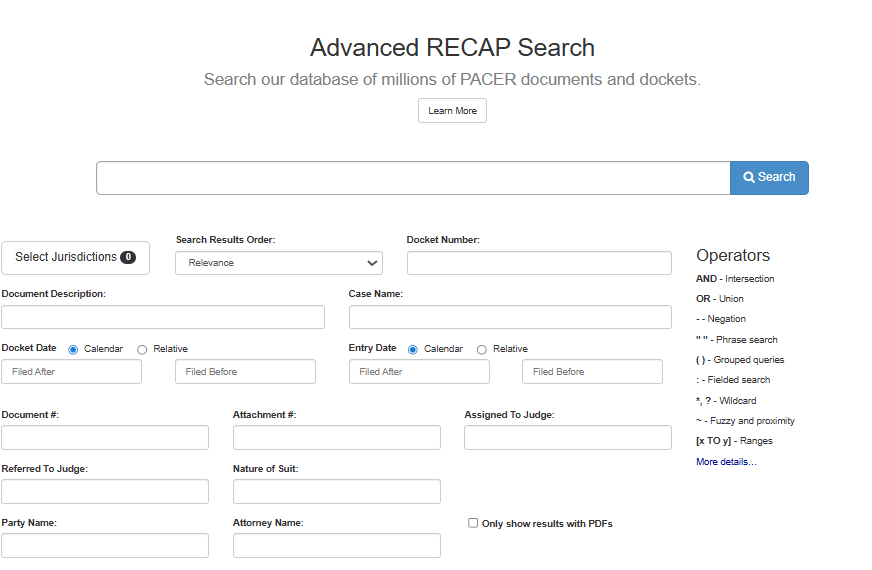
You can also do a search of the CourtListener Recap Archive which has docket sheets and documents for all federal cases. The Recap Archive with case search features is here and looks like this:
Finally, CourtListener is a good resource. The home page is here. It is free to join and relies
on donations. In my practice and writing, I use CourtListener a lot.
There are other similar free services, but this is the one I use. I’m not saying that it is the best, but it is my go-to source for court documents.
A Trump Account is a new tax-advantaged IRA for children under 18 that allows investments to grow tax-deferred until the child becomes an adult and takes control of the account.
The program was created under the One Big Beautiful Bill Act of 2025 to encourage early investing and help families build long-term wealth for the next generation.
Eligible newborns may receive a $1,000 government seed deposit, and parents, relatives, and even employers can contribute up to $5,000 per year from private sources.
Funds must be invested in low-cost index funds tracking major U.S. stock indexes, helping promote diversified, long-term investment growth.
Beginning on January 1 of the year the child turns 18, the account becomes subject to standard traditional IRA rules. Withdrawals at that point may be subject to income taxes and, if taken before age 59½, a 10% early withdrawal penalty — unless a qualifying exception applies, such as for higher education expenses or a first-time home purchase.
Because Trump Accounts involve contribution limits, tax rules, and withdrawal restrictions, families should understand how the accounts work and compare them with other savings options like 529 plans or custodial accounts before opening one.
A Trump Account is a new type of individual retirement account (IRA) established for eligible children under age 18, designed to allow funds to grow tax-deferred until the child reaches adulthood. The account is owned by the child but managed by a parent or guardian during the growth period. Created as part of the One Big Beautiful Bill Act, signed into law on July 4, 2025, these accounts — formally established under the Working Families Tax Cuts provisions of that legislation — aim to give children a financial head start by allowing investments to grow tax-deferred from a very young age. Parents, guardians, and even employers may contribute to the account, and eligible newborns may receive a government-funded seed deposit to begin investing immediately.
The concept behind Trump Accounts is simple: the earlier someone begins investing, the more powerful compound growth can become. By allowing families to start investing for a child at birth and continue contributing throughout childhood, the program is designed to build long-term wealth that could help fund education, a first home, business ventures, or retirement later in life.
However, because this program is new, many taxpayers are still asking the same question: what is a Trump account and how does it actually work? Understanding the eligibility requirements, contribution limits, investment rules, tax treatment, and withdrawal restrictions is essential before deciding whether this type of account makes sense for your family.
In this guide, we’ll take a detailed look at what a Trump account is, who qualifies, how contributions work, and how the account compares to other savings options for children.
What Is a Trump Account?
A Trump Account is a new type of individual retirement account (IRA) established for eligible children under age 18 that allows funds to grow tax-deferred until they are withdrawn later in life. The account is owned by the child but managed by a parent or guardian until the child reaches adulthood.
The account was introduced through federal tax legislation with the goal of expanding wealth-building opportunities for younger generations. By allowing contributions from multiple sources and investing the funds in diversified index funds, the program encourages long-term investment habits that can significantly increase savings over time.
Unlike some other accounts designed for minors, Trump Accounts are not limited to a specific purpose such as education. Instead, the program focuses on giving children access to long-term investments that can grow during their early years and potentially provide financial flexibility when they reach adulthood.
A New Type of Child Investment Account
Trump Accounts function similarly to certain retirement accounts but are specifically designed for minors. When the account is opened, the child becomes the official beneficiary, while the parent or guardian acts as the custodian responsible for managing the account until the child turns 18.
During this custodial period, the adult is responsible for making investment decisions, accepting contributions, and ensuring the account follows all applicable rules. Once the child reaches adulthood, control of the account transfers to them, allowing them to decide how to manage the funds moving forward.
The structure is somewhat comparable to custodial investment accounts such as UGMA or UTMA accounts, but Trump Accounts include specific tax advantages and contribution incentives designed to encourage early investing.
The Purpose of Trump Accounts
The primary purpose of Trump Accounts is to encourage long-term investing and wealth accumulation beginning in childhood. Financial experts often emphasize that the earlier someone begins investing, the more time their money has to grow through compound returns.
For example, imagine a child receives a $1,000 government seed deposit at birth. If that money is invested in a diversified stock index fund earning an average annual return of 7 percent, it could grow to roughly $3,400 by age 18 without any additional contributions.
If parents or family members contribute regularly during those 18 years, the balance could grow far more substantially. Even modest annual contributions could potentially result in tens of thousands of dollars by the time the child reaches adulthood.
By introducing investment opportunities at such an early stage, policymakers hope to encourage financial literacy and long-term wealth building across the country.
Why Trump Accounts Were Created
The creation of Trump Accounts reflects a broader policy goal of expanding financial opportunity and encouraging long-term investing among younger generations. Rising education costs, housing prices, and economic uncertainty have made it more difficult for young adults to establish financial stability early in life. Programs like this are intended to help address that challenge.
Encouraging Early Investing
One of the most powerful principles in personal finance is compound growth. The earlier someone begins investing, the more time their money has to grow through reinvested returns.
For example, if a family contributes $2,000 per year to a child’s Trump Account starting at birth, and the account earns an average annual return of 7 percent, the account could grow to over $70,000 by age 18. If contributions continue beyond that point, the long-term value could become significantly larger.
This example highlights why policymakers emphasize starting investments early. Even small contributions made consistently over time can grow into meaningful financial resources.
Expanding Wealth-Building Opportunities
Another goal behind the program is to broaden access to investing. Many Americans do not begin investing until later in life, often after entering the workforce. Trump Accounts attempt to change that by allowing children to become investors from birth.
By providing government seed deposits for eligible newborns and allowing contributions from parents, relatives, and employers, the program opens the door for more families to participate in long-term investment opportunities.
Providing Flexible Future Funding
Unlike certain education savings programs, Trump Accounts are designed with more flexibility in mind. Funds accumulated in these accounts may eventually be used for a variety of financial goals once the child reaches adulthood.
Possible uses could include helping pay for higher education, starting a business, purchasing a first home, or continuing to invest for retirement. Unlike 529 plans, Trump Accounts are not restricted to education expenses — however, because the account converts to a traditional IRA at age 18, early withdrawals before age 59½ are generally subject to a 10% penalty and income taxes, unless the withdrawal qualifies for an IRA exception, such as for higher education expenses, a first-time home purchase, or certain medical costs. By not restricting the funds to a single purpose, the program allows beneficiaries to apply their savings in ways that align with their personal financial goals.
Who Is Eligible for a Trump Account?
Trump Accounts are designed to be widely accessible, but eligibility rules determine who can open and benefit from these accounts.
Basic Eligibility Requirements
In general, a child may qualify for a Trump Account if they are under the age of 18 and have a valid Social Security number. Because minors cannot open financial accounts independently, a parent, legal guardian, or authorized custodian must establish the account on their behalf.
Once the account is created, the child becomes the beneficiary and the legal owner of the funds within the account. However, the custodian maintains control over the account’s management until the child reaches adulthood.
This custodial structure ensures that contributions and investments are handled responsibly while still allowing the child to benefit from long-term growth.
Government Seed Contribution for Newborns
One of the most notable features of the program is the federal government’s seed funding for eligible newborns. Under the pilot program, children born between January 1, 2025, and December 31, 2028, who are U.S. citizens with a valid Social Security number may receive a one-time $1,000 government contribution when a Trump Account is opened on their behalf.
This deposit serves as the initial investment for the account and is intended to demonstrate how early investing can grow over time. Even without additional contributions, that initial investment has the potential to grow significantly through compound returns.
Families who contribute additional funds throughout the child’s early years can further amplify this growth.
It is worth noting that children born before January 1, 2025, are also eligible to have a Trump Account opened on their behalf and can benefit from all of the account’s features — including the $5,000 annual contribution limit and tax-deferred growth. The only feature they will not qualify for is the $1,000 government pilot contribution, which is reserved for children born between 2025 and 2028.
How Trump Accounts Work
Understanding how the account functions over time is essential for families considering this savings option.
Custodial Structure
When a Trump Account is opened, the child is designated as the account beneficiary, but the account is managed by a parent or guardian acting as the custodian. The custodian is responsible for overseeing contributions, selecting investment options, and ensuring the account remains compliant with program rules.
This arrangement remains in place until the child reaches the age of 18, at which point control of the account transitions to the beneficiary.
Growth Through Investments
The funds within a Trump Account are invested in diversified stock index funds designed to track the performance of major U.S. stock markets. These funds provide broad exposure to the economy while keeping investment costs relatively low.
Because the investments are diversified across hundreds of companies, the risk associated with any single stock is reduced. This approach is intended to support long-term growth while minimizing volatility.
Transition at Age 18
Beginning on January 1 of the calendar year in which the child turns 18, the special Trump Account rules that applied during the growth period no longer apply, and the account becomes subject to standard traditional IRA rules. This means the beneficiary could gain access to the account several months before their actual birthday, depending on when they were born. At that point, the beneficiary assumes full control and can decide how to manage the funds going forward — whether that means withdrawing money for immediate financial needs or continuing to invest for long-term growth.
Contribution Rules for Trump Accounts
Contribution rules determine how much money can be deposited into the account each year and who is allowed to contribute.
Annual Contribution Limits
Currently, Trump Accounts allow a maximum contribution of $5,000 per child per year. This limit applies to the total contributions from all private sources combined, including parents, relatives, employers, and others. The $1,000 government pilot seed deposit does not count toward this limit — families may contribute the full $5,000 in addition to the government’s contribution.
These limits are indexed for inflation and will begin adjusting after 2027. It is important to note that while IRS Form 4547 can be filed now to establish a Trump Account, no contributions can be made until July 4, 2026, when the accounts officially open for funding.
Who Can Contribute
One unique aspect of Trump Accounts is that contributions are not limited to parents. Grandparents, other relatives, and even family friends may contribute to the account. This allows extended families to participate in building a child’s financial future.
For example, instead of traditional gifts for birthdays or holidays, relatives might choose to contribute to a child’s Trump Account. Over time, these contributions could accumulate into a meaningful investment portfolio.
Employer Contributions
Trump Accounts allow a maximum combined contribution of $5,000 per child per year from all private sources — including parents, relatives, and employers. Employer contributions are capped at $2,500 of that $5,000 total. The federal government’s $1,000 pilot seed deposit, as well as any qualifying contributions from charitable organizations or other government entities, do not count toward this annual limit. These limits are indexed for inflation and will begin adjusting after 2027.
How the Money Can Be Invested
The program includes specific investment guidelines designed to promote responsible long-term investing.
Index Fund Requirement
Funds inside Trump Accounts must be invested in low-cost index mutual funds or ETFs that track major U.S. equity indexes — such as the S&P 500 — with annual fees capped at 0.10% and no leverage permitted. These funds provide diversified exposure to the stock market and typically charge significantly lower fees than actively managed funds.
Examples may include funds that track the S&P 500 or the broader U.S. stock market. Because these funds represent large segments of the economy, they are often considered suitable for long-term investment strategies.
Why Index Funds Are Used
Index funds are widely recommended by financial experts because they combine diversification, relatively low costs, and strong long-term performance. By limiting investment choices to these types of funds, the program aims to reduce speculative investing and keep the focus on steady growth over time.
This strategy aligns with the long-term nature of the account, as the funds are expected to remain invested for many years before they are accessed.
Tax Treatment of Trump Accounts
Tax advantages are one of the key features that make these accounts appealing to many families.
Tax-Deferred Growth
Money invested in a Trump Account grows tax-deferred, meaning taxes are not owed on investment gains while the funds remain in the account. This allows returns to compound more efficiently over time.
For instance, if an investment earns dividends or increases in value, those gains are reinvested without triggering immediate tax liability.
Taxes on Withdrawals
Contributions made by individuals — such as parents, relatives, or the account beneficiary — are made with after-tax dollars. Upon withdrawal, only the earnings on those contributions are subject to income tax. Contributions from employers or the government, along with all investment earnings, are taxed as ordinary income when withdrawn. Because a Trump Account may contain a mix of contribution types, families should keep careful records of who contributed what, as the source of contributions affects how each dollar is taxed at withdrawal. One notable planning advantage: if a beneficiary keeps their Trump Account separate from other IRAs after turning 18, the accounts are not combined when calculating taxes and penalties on withdrawals, which may provide additional financial planning flexibility.
Possible State Tax Differences
While federal tax rules apply nationwide, individual states may treat Trump Accounts differently for state tax purposes. Families should review their state’s tax regulations when planning withdrawals or contributions.
Withdrawal Rules
Withdrawals from Trump Accounts are subject to certain restrictions intended to preserve the funds for long-term financial goals.
Withdrawals Before Age 18
In most cases, funds cannot be withdrawn from the account until the child reaches age 18. This restriction helps ensure that the investments remain intact during childhood and have sufficient time to grow.
Withdrawals After Age 18
Once the child turns 18, the Trump Account converts to a traditional IRA and the beneficiary assumes full control. Withdrawals are taxed as ordinary income. However, because the account is now subject to standard IRA rules, withdrawals made before age 59½ are generally subject to a 10% early withdrawal penalty — unless an exception applies, such as for qualified higher education expenses, a first-time home purchase, or certain medical expenses. Many beneficiaries may choose to leave funds invested for additional years or roll the account into another eligible retirement account.
How to Open a Trump Account
Opening a Trump Account generally involves several steps designed to verify eligibility and establish the account with a participating financial institution.
Step 1: Complete IRS Form 4547
To establish a Trump Account, an authorized individual — generally a parent, legal guardian, adult sibling, or grandparent (in that order of priority) — must complete IRS Form 4547 (Trump Account Election). This form can be filed with a 2025 tax return or submitted at any time. An online portal is expected to be available at trumpaccounts.gov starting in mid-2026. For eligible newborns, this form also serves as enrollment in the $1,000 pilot seed deposit program. Note that while accounts can be established now, contributions cannot begin until July 4, 2026.
Step 2: Provide Required Information
To establish the account, the custodian must provide identifying information for both the child and the adult responsible for managing the account, including Social Security numbers and other personal details needed for verification.
Step 3: Select a Financial Institution
The account must be opened with a financial institution that participates in the program and offers approved investment options.
Step 4: Begin Contributions
Once the account is active, contributions can begin according to the program’s annual limits. Eligible newborns may also receive the government seed deposit shortly after the account is established.
Trump Accounts vs Other Savings Accounts for Kids
Families should compare Trump Accounts with other savings vehicles to determine which option best fits their financial goals.
Trump Accounts vs 529 Plans
529 plans are specifically designed for education savings and offer tax-free withdrawals when funds are used for qualified education expenses. Trump Accounts, by contrast, offer greater flexibility in how the funds may eventually be used.
Trump Accounts vs Custodial Accounts (UGMA/UTMA)
Custodial brokerage accounts allow for a wider range of investments but do not offer the same tax advantages as Trump Accounts. Additionally, earnings in custodial accounts may be subject to the “kiddie tax.”
Trump Accounts vs Roth IRAs for Kids
Roth IRAs can be powerful savings tools for minors who have earned income, but many children do not qualify because they lack employment income. Trump Accounts do not require the child to have earned income in order to receive contributions.
Pros and Cons of Trump Accounts
Like any financial program, Trump Accounts offer both benefits and limitations.
Potential Benefits
The most significant advantages include the potential for early investment growth, tax-deferred compounding, and the opportunity for families to build wealth for children over many years.
The government seed contribution for eligible newborns may also provide a helpful starting point.
Potential Drawbacks
However, the program does include contribution limits and restricted investment options. Because the program is new, additional regulations and clarifications may also emerge in the coming years.
What Families Should Know Before Opening One
Families considering a Trump Account should evaluate their long-term financial goals before opening one.
Consider Long-Term Goals
Parents should think about how the account might support a child’s future plans, whether those involve education, entrepreneurship, or long-term investing.
Compare With Other Options
Other accounts, such as 529 plans or custodial brokerage accounts, may offer different advantages depending on the family’s priorities.
Think About Contribution Strategy
Even modest contributions made consistently can grow substantially over time. Families who plan to contribute regularly may benefit the most from the program.
How Optima Tax Relief Can Help
While Trump Accounts are designed to encourage long-term investing for children, they may still create tax questions or complications for families. Because these accounts involve contributions, investment growth, and eventual withdrawals, taxpayers may face reporting requirements they don’t fully understand. For example, withdrawals may be taxed as ordinary income depending on how the account transitions after the child turns 18. If distributions are reported incorrectly or contribution limits are exceeded, taxpayers could receive unexpected tax bills, penalties, or even IRS notices.
If tax issues arise related to Trump Accounts—or any other tax matter—Optima Tax Relief may be able to help. Our team of tax professionals works with taxpayers to review their situation, address IRS notices, and identify available relief options. Whether someone is dealing with penalties, unreported income, or a balance owed after a distribution, Optima Tax Relief can help guide them through the process and work toward resolving their tax concerns.
Frequently Asked Questions
What is a Trump account?
A Trump Account is a new type of individual retirement account (IRA) established for eligible children under age 18 that allows contributions from parents, relatives, and others while the funds grow tax deferred. The goal is to encourage long-term investing early in life, so the child has financial resources when they reach adulthood.
How do Trump accounts work?
Trump accounts function as custodial investment accounts managed by a parent or guardian until the child turns 18. Contributions are invested in diversified index funds, allowing the money to grow over time before the beneficiary gains control of the account as an adult.
How to open a Trump account?
A parent or legal guardian typically opens the account through a participating financial institution or by electing to establish one through the program once it becomes available. The process generally requires the child’s Social Security number and identification for the custodian managing the account.
Who qualifies for a Trump account?
Children under the age of 18 who have a valid Social Security number may qualify for a Trump account. A parent or guardian must open the account and act as the custodian until the child reaches adulthood.
Tax Help for People Who Owe
In simple terms, it is a tax-advantaged investment account designed to help children build wealth from an early age. By combining government seed funding, tax-deferred growth, and long-term investing strategies, the program aims to give younger generations a stronger financial foundation.
For families interested in starting an investment plan for their children, Trump Accounts represent a new option worth considering. When combined with consistent contributions and a long-term investment approach, these accounts could help young Americans begin adulthood with meaningful financial resources already in place. Optima Tax Relief is the nation’s leading tax resolution firm with over a decade of experience helping taxpayers.
If You Need Tax Help, Contact Us Today for a Free Consultation
The Tax team in Monash’s Business Law and Taxation department
We are delighted to announce that Austaxpolicy, established by TTPI, is now a collaboration between the ANU and Monash University. The ANU looks forward to working with the Tax team in Monash’s Business Law and Taxation department (pictured above) to jointly advance our shared goal of disseminating tax and transfer research for the public benefit.
Monash’s Tax Law Research Group undertakes qualitative and quantitative research on tax law and policy issues of national and international significance. The Tax team’s subject matter expertise spans the full taxation spectrum, including personal and corporate income tax, energy and resources taxation, value added taxes, taxpayer compliance, and international taxation. The Group is committed to developing innovative cross-disciplinary projects that produce rigorous and accessible research for policymakers, the academy, the profession and the broader community.
Together, we will draw on our combined expertise, networks and institutional strengths to share important and pioneering research on tax and transfer policy with a global audience.
The Tax team in Monash’s Business Law and Taxation department, from left to right in image:
Agustinus Saputra (PhD Student), Ananda Anggara S (PhD Student), Swapna Verma, Amanda Selvarajah, Amna Shah, Helen Ping (co-editor of Austaxpolicy), John Minas (co-editor of Austaxpolicy and Director of the Taxation Law and Policy Research Group), John Bevacqua (head of Monash Department of Business Law and Taxation), Wide Putra (PhD Student)
Citation :
Walpola,Sonali,Ping,Yuan,Minas,John,Morris,Todd,Labanca,Claudio& You,Jean, (2026),
Austaxpolicy – ANU and Monash Collaboration,
Austaxpolicy: Tax and Transfer Policy Blog,
20 March 2026, Available from:
About the Author
Sonali Walpola
Dr Sonali Walpola is an Associate Professor at the ANU College of Business and Economics. Sonali’s research interests broadly encompass taxation law and policy and the nature of common law developments. Her recent projects have analysed integrity measures to address tax avoidance through trusts, the interpretation of the residence article in double tax agreements, and the Australian High Court’s attitude to change in the common law. Sonali is a co-editor of Austaxpolicy, the Journal of Australian Taxation and Law&History, which is the journal of the Australia New Zealand Law History Society. Sonali is a fellow of the ANU Tax and Transfer Policy Institute, a member of The Tax Institute Higher Education Academic Board, and the Academic Lead of the ANU Tax Clinic, which she co-founded in 2019.
Yuan Ping
Yuan (Helen) Ping is a Lecturer in Business and Corporate Law at the Department of Business Law and Taxation of Monash University and a qualified legal practitioner. She is currently completing a PhD at the Research School of Accounting, Australian National University. Helen’s research interests are in the fields of regulatory enforcement and corporate tax behaviour, specifically examining the effects of the U.S. Securities and Exchange Commission’s tax-related comment letters on market response and firm policies. She has published papers in the Australian Tax Forum and eJournal of Tax Research. Helen is also the co-editor of Austaxpolicy.
John Minas
John Minas is an Associate Professor in the Department of Business Law and Taxation at Monash University, a Research Affiliate with the Tax and Transfer Policy Institute, Crawford School of Public Policy, at ANU, and an Adjunct Research Fellow in the Law Futures Centre at Griffith University.
Todd Morris
Todd Morris is a Lecturer in the School of Economics at the University of Queensland and an Economics Editor at AusTaxPolicy. He obtained his PhD from the University of Melbourne in 2020. After that, he was a postdoctoral researcher at the Max Planck Institute for Social Law and Social Policy from 2019 to 2021 and at HEC Montreal from 2022 to 2023. His main research interests are in public and labour economics. A unifying theme to his research is the causal evaluation of government policies (often related to retirement).
Claudio Labanca
Dr Claudio Labanca is a Senior Lecturer in the Department of Economics at Monash University. His research interests include Labor Economics, Public Economics and Applied Microeconomics. Claudio is a Research Affiliate at the IZA, the Tax and Transfer Policy Institute at the ANU, SoDa Labs, and is a co-editor of Austaxpolicy.
Jean You
Dr Jean You is a Lecturer in Research School of Accounting of Australian National University. Jean’s research interests are in the fields of regulatory enforcement and policy setting, specifically tax transparency and tax avoidance in multinational entities. She has published papers in the Australian Tax Forum and ABACUS.