The OBBBA created yet one more savings vehicle for parents and other relatives of children under age 18 to consider. While the new provisions are lengthy and a bit complicated, a good deal of understandable information is being pushed out by Treasury/IRS (such as https://www.trumpaccounts.gov/) and it is an interesting savings vehicle worth looking into.
New Section 530A basically allows new accounts that operate much like a traditional IRA only they are for kids under age 18 and have restrictions on what they can invest in. Up to $5,000 can be contributed to the account annually (this amount is adjusted for inflation starting in 2028) until the year of the child’s 17th birthday. Of this amount, up to $2,500 can be contributed by an employer (per employee per year rather than per employee Trump Account) if the employer creates this employee benefit, written, per guidance to be issued by the IRS. The $2,500 is tax free to the employee (Section 128).
For a baby born in 2025 through 2028, the government will put $1,000 into the account if the baby is a US citizen and has an SSN and the parent or other relative makes the election. This doesn’t count towards the maximum $5,000 contribution per year. The $1,000 is treated as a tax refund so not taxable.
No distributions are allowed until the year the child turns 18 but the goal is for the child to learn about future value, savings and perhaps a bit about taxes, and let the money continue to grow. The child can start contributing via IRA rules once working and keeping the account. If disciplined, to keep the account and not pull it out for a new car or big party, the account could grow tremendously. For example, parents starting one in 2026 (contributions can’t start until 7/4/26) for their 3-year old child, contributing $5,000 per year until age 17 (15 contributions), assuming a 5% rate of return will have almost $108,000 at that time. If no further contributions, when the child is 60, the balance would be about $837,000.
You need to track basis in the account and if a state doesn’t conform, also track state tax basis in the account. If would be a lot simpler if states conform. For more information:I offer a few suggestions to make these accounts more enticing and protected:
1. Add a provision similar to Section 529(c)(2)(A)(i) that contributions to the account on behalf of any designated beneficiary is treated as a completed gift to that beneficiary which is NOT a future interest in property to make it clear that the gift can be exempt from reporting and gift tax under the $19,000 annual gift exclusion.
2. Encourage contributions and people not forgetting about the accounts by allowing tax refunds to be directed to the account(s).
3. Rather than have parents or someone elect to set up an account for an eligible baby born in 2025 through 2028, set it up automatically when the parents apply for an SSN for the baby, and sent information to the parents about the account and encourage them to continue to add funds as they can and set them up for eligible siblings too if possible.
4. Add more than a 10% withdrawal penalty to discourage 18-year-olds from emptying the account at age 18 or soon thereafter. Provide an incentive to encourage them to convert the account to a traditional IRA and continue making contributions; the incentive might be another $1,000 into the account at age 21.
5. Encourage states to conform to the OBBBA Trump Account provisions to simplify tracking basis in the account and for conformity on annual tax effects.
6. Require trustees to make contact with beneficiaries (and parents until beneficiaries turn 18) because it is possible beneficiaries will forget about the account and the trustee will end up sending it to the state as unclaimed property at some point in the future. This regular contact would ideally include some financial literacy tips.
IRS tax relief programs offer multiple ways to manage or reduce tax debt in 2026, including installment agreements, Offers in Compromise, penalty abatement, and Currently Not Collectible status, depending on the taxpayer’s financial situation.
Who qualifies for tax relief is primarily determined by factors such as income, living expenses, assets, total tax debt, and overall compliance with IRS filing requirements.
Financial hardship and limited ability to pay are central considerations; taxpayers who cannot cover essential expenses may qualify for structured payment plans or settlement options.
How to qualify for tax relief involves evaluating your financial profile, ensuring all tax returns are filed, and submitting required documentation to the IRS for the program that best fits your situation.
Even large tax debts, past financial struggles, or active IRS enforcement actions do not automatically disqualify you from relief, though documentation and professional guidance are often necessary to navigate the process.
Optima Tax Relief can help taxpayers qualify for tax relief programs by assessing eligibility, preparing documentation, communicating with the IRS, negotiating settlements, and creating manageable repayment plans tailored to each taxpayer’s circumstances.
Millions of Americans struggle with tax debt each year. Rising living costs, unexpected financial setbacks, and simple filing mistakes can all lead to a balance owed to the IRS. For taxpayers facing mounting penalties and interest, the good news is that the IRS offers several tax relief programs designed to help individuals resolve their tax debt in manageable ways.
But many people aren’t sure who qualifies for tax relief, how the IRS evaluates eligibility, or what options are available. In reality, tax relief doesn’t just apply to extreme financial hardship. Many taxpayers qualify for some form of assistance based on their financial situation, ability to pay, and overall compliance with tax filing requirements.
This guide explains what tax relief is, the main IRS programs available in 2026, how to qualify for tax relief, and the factors the IRS considers when deciding whether to approve relief.
What IRS Tax Relief Programs Are Available in 2026?
Before understanding who qualifies for tax relief, it’s important to know the different types of relief options available. The IRS offers multiple programs designed to help taxpayers manage or resolve tax debt depending on their financial circumstances.
IRS Fresh Start Program
The Fresh Start Initiative was created to make it easier for taxpayers to repay tax debt and avoid aggressive collection actions. While many people refer to it as a single program, it is actually a collection of policy changes that expanded access to existing relief options.
The Fresh Start Initiative helped expand eligibility for installment agreements, broaden access to streamlined payment plans, and make it easier for taxpayers to resolve tax liens once their debts are satisfied. It also improved access to settlement options such as Offers in Compromise.
For example, a taxpayer who owes $35,000 in back taxes but cannot pay the entire balance upfront may qualify for a structured monthly payment plan through policies introduced by the Fresh Start Initiative. This allows the taxpayer to gradually repay the debt rather than facing immediate enforcement actions from the IRS.
Installment Agreements
Installment agreements are one of the most widely used tax relief programs available to taxpayers who cannot afford to pay their tax debt all at once.
These agreements allow individuals to repay their tax balance through manageable monthly payments instead of making a single lump-sum payment. In many cases, installment agreements are the first relief option the IRS considers because they allow taxpayers to gradually resolve their debt while staying compliant.
There are several types of installment agreements available depending on the taxpayer’s situation. Short-term payment plans give taxpayers up to 180 days to pay their balance in full and are generally available to those who owe less than $100,000 in combined tax, penalties, and interest. Long-term installment agreements — also called Simple Payment Plans — allow taxpayers who owe $50,000 or less in combined tax, penalties, and interest to make monthly payments over time, typically up to 72 months (six years). In some cases, taxpayers who cannot fully repay within that period may be able to extend payments further, up to the IRS collection statute of generally 10 years, though this typically requires additional financial documentation. Streamlined installment agreements are available for many taxpayers whose tax balances fall within certain thresholds, making the approval process faster and simpler.
For example, a freelancer who underestimated quarterly tax payments and ends up owing $18,000 might qualify for a long-term installment agreement that allows them to pay the balance through affordable monthly payments instead of facing immediate IRS collections.
Offer in Compromise (OIC)
An Offer in Compromise allows eligible taxpayers to settle their tax debt for less than the full amount owed when the IRS determines that collecting the entire balance is unlikely.
To determine whether an Offer in Compromise is appropriate, the IRS evaluates the taxpayer’s financial situation in detail. This includes reviewing income, necessary living expenses, asset equity, and potential future earnings. If the IRS determines that a taxpayer’s financial situation makes full repayment unrealistic, it may accept a reduced settlement amount.
For example, someone who owes $50,000 in tax debt but has limited income, minimal assets, and little future earning potential may qualify for an Offer in Compromise. In this situation, the IRS may accept a reduced amount as a final settlement because it believes the taxpayer cannot reasonably repay the full balance.
Currently Not Collectible (CNC) Status
Some taxpayers simply do not have the financial ability to pay their tax debt at a given time. In these situations, the IRS may place the account into Currently Not Collectible (CNC) status.
When a taxpayer is placed into CNC status, the IRS temporarily pauses active collection efforts. This means actions such as wage garnishments, bank levies, or other aggressive collection attempts are suspended while the taxpayer’s financial hardship continues.
Although interest and penalties may still accrue during this time, CNC status recognizes that forcing payment could create significant financial hardship. For example, a taxpayer who recently lost their job and is struggling to cover housing, food, and medical expenses may qualify for CNC status until their financial situation improves.
Penalty Abatement
In many cases, taxpayers owe significant penalties in addition to the original tax balance. Penalty abatement allows the IRS to remove or reduce certain penalties when specific conditions are met.
One of the most common forms is First-Time Penalty Abatement, which may be available to taxpayers who have a history of filing and paying their taxes on time. Another option is Reasonable Cause Penalty Relief, which is granted when taxpayers can demonstrate that circumstances beyond their control caused them to miss a filing deadline or payment obligation.
Examples of reasonable cause include serious illness, natural disasters, financial hardship, or relying on incorrect professional advice. Reducing penalties can significantly decrease the total amount owed and make resolving tax debt more manageable.
Who Qualifies for IRS Tax Relief Programs?
The IRS evaluates several key factors when determining who qualifies for tax relief. Although each program has its own requirements, most eligibility decisions center around a taxpayer’s ability to pay and overall financial situation.
Financial Hardship
One of the most important considerations in determining eligibility is whether paying the full tax balance would create financial hardship for the taxpayer.
The IRS reviews several aspects of a taxpayer’s financial profile, including monthly income, housing costs, transportation expenses, medical expenses, and the number of dependents in the household. If paying the full tax debt would prevent a taxpayer from covering necessary living expenses, the IRS may determine that relief options are appropriate.
For example, a single parent earning $45,000 per year while supporting two children may have limited disposable income after paying rent, groceries, childcare, and transportation costs. In this case, the IRS may determine that a structured payment plan or other relief option is necessary.
Compliance With Filing Requirements
Another key factor in determining eligibility for relief is whether the taxpayer is compliant with IRS filing requirements.
The IRS generally requires taxpayers to file all required tax returns before approving most forms of tax relief. This ensures the agency has an accurate picture of the taxpayer’s total liability. Taxpayers who have several unfiled returns may still qualify for relief, but those returns will typically need to be submitted before the IRS will move forward with evaluating relief options.
Demonstrated Ability (or Inability) to Pay
When determining how to qualify for tax relief, the IRS carefully evaluates whether the taxpayer has the financial ability to repay the debt.
This analysis focuses on disposable income, which is the amount remaining after necessary living expenses are paid. If a taxpayer has sufficient disposable income, the IRS may require installment payments over time. If disposable income is extremely limited, the IRS may consider settlement options or temporary collection relief.
Total Amount of Tax Debt
The amount of tax debt owed can also influence eligibility for different relief programs.
Certain programs have thresholds or simplified qualification processes for smaller balances, while larger tax debts may require more detailed financial documentation. Regardless of the amount owed, the IRS generally attempts to create a path toward resolution that aligns with the taxpayer’s financial capabilities.
Common Signs You May Qualify for IRS Tax Relief
Many taxpayers assume they do not qualify for relief, but several warning signs suggest that tax relief programs may be available.
You Cannot Pay Your Tax Debt in Full
If paying your entire tax balance would deplete your savings or prevent you from covering basic living expenses, you may qualify for a payment plan or another form of relief.
IRS Penalties and Interest Are Growing
When penalties and interest continue to increase the amount owed, relief programs such as penalty abatement or settlement options may help reduce the total debt.
You’re Facing IRS Collection Actions
Taxpayers who are facing wage garnishments, tax liens, or bank levies may still qualify for relief options that help stop or reduce collection actions.
Your Financial Situation Has Changed
Major life events can significantly affect your ability to pay taxes. Situations such as job loss, divorce, medical emergencies, or a downturn in business income can create financial hardship that may make you eligible for relief programs.
What “IRS Tax Relief” Actually Means
Many taxpayers misunderstand what tax relief is and assume it automatically eliminates tax debt.
Tax Relief Does Not Always Mean Debt Forgiveness
While some programs like Offers in Compromise can reduce the amount owed, most tax relief solutions focus on making repayment more manageable. This may include structured payment plans, temporary pauses on collections, or the reduction of penalties.
The IRS Focuses on Resolution
The IRS generally prefers to work with taxpayers who are willing to resolve their debt rather than those who ignore it. Entering a relief program demonstrates a willingness to address the situation and can help taxpayers avoid more aggressive collection actions.
Does the Fresh Start Program Still Apply in 2026?
The Fresh Start Initiative was launched in 2011 to help a growing number of taxpayers struggling to manage and resolve federal tax debt. Rather than creating entirely new programs, the IRS expanded eligibility and adjusted the rules for existing relief options to make them more accessible.
Fresh Start Expanded Access to Relief
The initiative expanded eligibility for installment agreements, made it easier to resolve tax liens, and improved access to settlement options such as Offers in Compromise.
Fresh Start Is Not a Single Program
Rather than being one standalone program, the Fresh Start Initiative refers to policy changes that expanded access to several IRS tax relief options. These policies continue to shape how taxpayers qualify for relief today.
What Does NOT Automatically Disqualify You From Tax Relief
Many taxpayers believe certain financial situations automatically disqualify them from relief, but this is not always the case.
Having a Large Tax Debt
Even taxpayers with substantial tax debt may still qualify for installment agreements or settlement options depending on their financial situation.
Past Financial Struggles
Previous financial challenges such as unemployment, bankruptcy, or temporary income loss do not necessarily prevent taxpayers from qualifying for relief.
IRS Enforcement Actions
Even if the IRS has already initiated collection actions such as wage garnishments or bank levies, relief options may still be available to resolve the debt.
Do You Need All Tax Returns Filed to Qualify?
Tax compliance plays an important role in determining how to qualify for tax relief.
Filing Missing Returns Is Usually Required
The IRS typically requires taxpayers to file all outstanding tax returns before approving relief programs so that the total tax liability can be accurately calculated.
Unfiled Returns Do Not Permanently Disqualify You
Although unfiled returns can delay approval, they rarely prevent taxpayers from qualifying for relief entirely. Once the returns are filed and financial documentation is submitted, the IRS can review eligibility.
How the IRS Decides Whether to Approve Tax Relief
When evaluating requests for relief programs, the IRS conducts a detailed financial analysis.
Income and Expenses
The IRS compares a taxpayer’s income with allowable living expenses based on established Collection Financial Standards. These standards help determine reasonable costs for housing, food, transportation, utilities, and healthcare.
Assets and Equity
The IRS also evaluates assets such as homes, vehicles, investments, and retirement accounts. If a taxpayer has significant equity in assets, the IRS may expect that equity to be applied toward the tax debt.
Future Earning Potential
In some cases, the IRS evaluates whether the taxpayer’s income is likely to increase in the future. This can influence whether a settlement offer is accepted or whether a payment plan is required.
Overall Financial Hardship
Ultimately, the IRS determines whether requiring full repayment would create financial hardship or whether relief options are necessary to resolve the debt realistically.
What Happens If You Ignore Your Tax Debt?
Ignoring tax debt can make the situation significantly worse over time.
The IRS Collection Process
If taxpayers fail to respond to IRS notices or payment requests, the agency may eventually take enforcement actions. These actions can include placing tax liens on property, garnishing wages through an employer, levying bank accounts, or seizing certain assets. At the same time, penalties and interest will continue accumulating, increasing the total balance owed.
Early Action Provides More Options
Taxpayers who address their tax debt early typically have access to more flexible solutions. Waiting until the IRS begins enforcement actions can limit available options and make resolving the situation more difficult.
What Company Can Help Qualify Me for Tax Relief?
Navigating IRS tax debt can feel overwhelming, especially for taxpayers facing large balances, unfiled returns, or active collection actions like wage garnishments or bank levies. For many taxpayers, working with an experienced tax relief provider can make the process significantly easier.
How Optima Tax Relief Assists Taxpayers
Optima Tax Relief specializes in helping taxpayers evaluate their eligibility for IRS relief programs and navigate the resolution process.
Optima Tax Relief begins by reviewing a taxpayer’s financial situation, including income, necessary living expenses, assets, and total tax liability. This evaluation helps determine which tax relief programs may be most appropriate, whether that involves an installment agreement, an Offer in Compromise, penalty abatement, or another IRS resolution option.
Once eligibility is identified, our team assists with preparing and submitting the documentation required by the IRS, including detailed financial disclosures used to evaluate relief requests. We also communicate directly with the IRS on behalf of taxpayers, helping ensure that filings, applications, and negotiations are handled properly.
Because resolving IRS debt can involve complex paperwork, strict deadlines, and ongoing communication with the IRS, working with experienced tax professionals can simplify the process and reduce stress for taxpayers. Optima Tax Relief helps clients understand who qualifies for tax relief, identify the most effective resolution strategy, and pursue solutions that may help stop collection actions and create a manageable plan for resolving tax debt.
Frequently Asked Questions
What is tax relief?
Tax relief refers to programs that help taxpayers manage, reduce, or resolve their IRS debt. It can include payment plans, reduced penalties, settlement offers, or temporary pauses on collections.
How do I qualify for tax relief programs?
You qualify by filing all required tax returns, providing accurate financial information, and showing that you cannot pay your full tax debt without undue hardship. Programs like installment agreements and Offers in Compromise have specific eligibility criteria.
What happens if I ignore my tax debt?
Ignoring tax debt can lead to liens, wage garnishments, bank levies, and growing penalties. Addressing the debt early increases the chances of qualifying for tax relief programs and avoiding enforcement actions.
How can Optima Tax Relief help me qualify for tax relief?
Optima Tax Relief evaluates your financial situation, determines the most appropriate IRS programs, prepares documentation, and negotiates directly with the IRS to create manageable repayment plans.
Tax Help for People Who Owe
Understanding who qualifies for tax relief in 2026 can help taxpayers take control of their financial situation before IRS penalties and enforcement actions escalate.
The IRS offers multiple tax relief programs, including installment agreements, Offers in Compromise, penalty abatement, and temporary collection pauses for those experiencing financial hardship. Eligibility typically depends on income, expenses, assets, and the taxpayer’s overall ability to repay the debt.
Even individuals with significant tax balances or past financial challenges may still qualify for assistance. If you’re struggling with IRS debt and wondering how to qualify for tax relief, taking action early and exploring available options can help you resolve your tax obligations and move toward financial stability. Optima Tax Relief is the nation’s leading tax resolution firm with over $3 billion in resolved tax liabilities.
If You Need Tax Help, Contact Us Today for a Free Consultation.
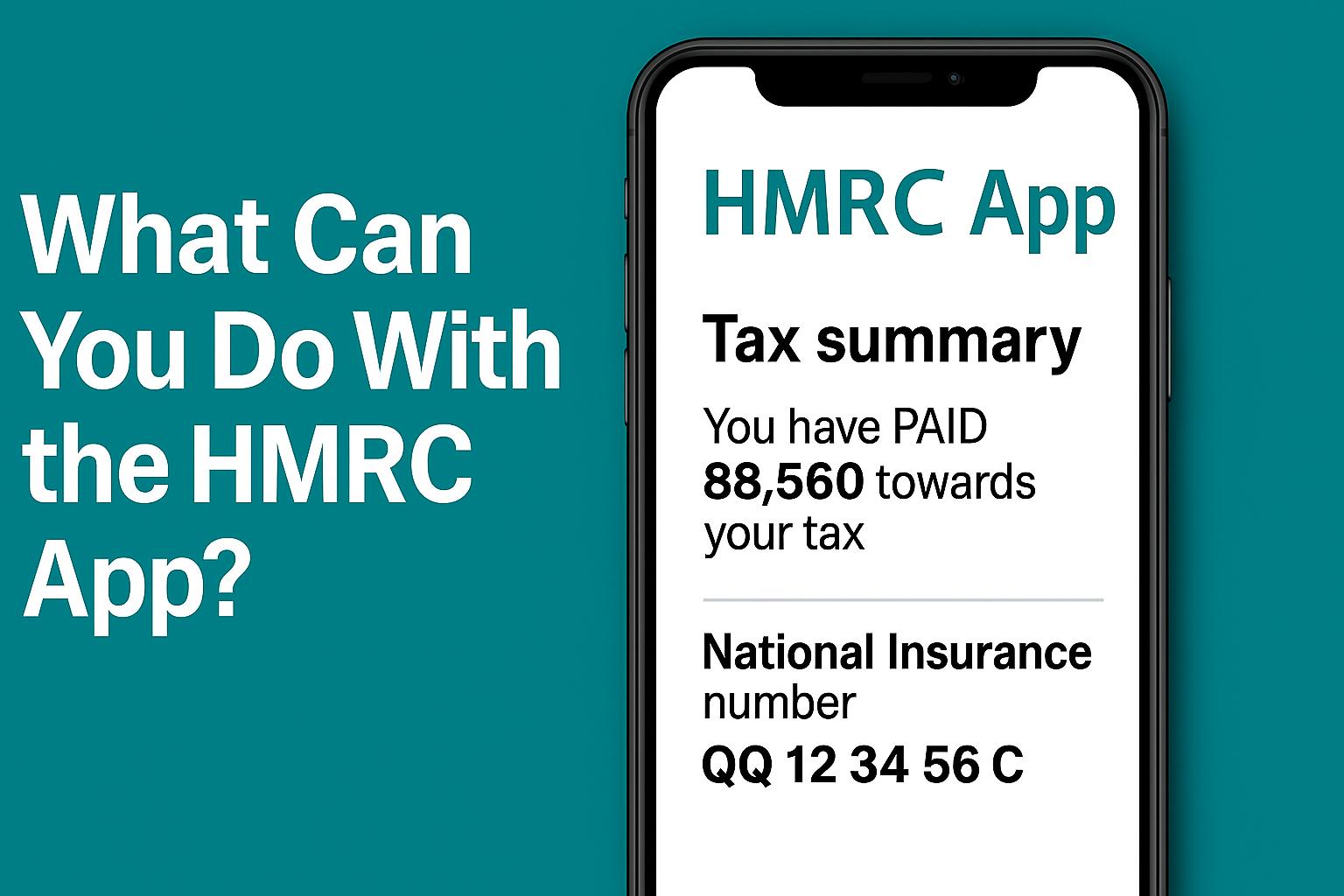
Many UK taxpayers wonder what can you do with the HMRC app. The free app runs on both iPhone and Android devices. It has grown from a basic information tool into a practical platform for personal tax tasks.
Knowing what can you do with the HMRC app could save you a long wait on hold to HMRC. The app consistently ranks in the top five finance apps on both the App Store and Google Play.
Since its launch, the app has been downloaded by more than seven million people across the UK.
HMRC estimates that millions of phone calls each year could be avoided by using the app instead. That figure points to just how broad what can you do with the HMRC app actually is.
If you have never used it before, you may be surprised by what can you do with the HMRC app today.
From checking your tax code to finding your National Insurance number, it covers a wide range of personal tax tasks.
This article explains what can you do with the HMRC app — including its limitations — so you can judge whether it belongs on your phone.
What Can You Do With the HMRC App to Check Your Tax Code?
Your tax code tells HMRC how much Income Tax to deduct from your pay. If it is wrong, you could end up paying too much — or too little.
The app lets you view your current tax code instantly after signing in. You can also see a breakdown of why that code has been applied.
This means you can spot potential errors before they affect your take-home pay. The app displays the income and deductions HMRC holds on your record.
If something looks incorrect, you can contact HMRC directly through the app to raise a query. Checking your tax code is one of the most common reasons people log in each month.
HMRC app features around tax code visibility are available to all users who sign in with a Government Gateway account. The process takes seconds and requires no phone calls.
Where to Download the HMRC App
The HMRC app download is free and takes just a few moments. iPhone users can find it on the App Store and Android users on Google Play — search for “HMRC” and look for the official app from HM Revenue & Customs.
The first time you sign in, you will need your Government Gateway user ID and password. After that, you can set up a six-digit PIN, fingerprint, or facial recognition for quicker access.
If you do not already have a Government Gateway account, you can create one during the sign-in process.
Viewing Your Employment History and Pay Information
The app displays your income and HMRC app employment history going back up to five tax years. This is particularly useful if you are changing jobs or applying for a mortgage.
Each entry shows the employer name, the dates of employment, and the income recorded by HMRC. You can use this information to cross-check what appears on your payslips.
Discrepancies between your records and HMRC’s data can sometimes point to a tax code problem. Spotting these early may help you avoid unexpected tax bills later in the year.
The employment history function sits within the personal tax summary section of the app. It is one of the most straightforward areas to navigate and requires no specialist knowledge to interpret.
HMRC App National Insurance Number: Finding and Saving It
Your National Insurance number (NINO) is one of the most frequently requested pieces of personal information.
The HMRC app national insurance number feature lets you find it instantly without searching through old letters.
Once located, you can save it directly to your Apple Wallet or Google Wallet for quick access. You can also print it or share it when needed.
HMRC receives a substantial volume of calls each year from people who simply need their NI number. Accessing it through the app takes a matter of seconds.
The app also lets you view your National Insurance contribution record. This allows you to see whether there are any gaps — which may be relevant to your future State Pension entitlement.
Checking for NI gaps is a straightforward task through the app. If gaps exist, GOV.UK provides further guidance on whether you may be able to fill them.
Checking and Claiming a Tax Refund
One of the more valuable HMRC app features is the ability to check whether you have overpaid tax. The app shows whether a refund may be owed to you based on HMRC’s records.
This HMRC app tax refund process is straightforward and does not require a phone call. If a refund appears to be due, you can submit your claim directly through the app.
In many cases, payment can be made to your bank account rather than by cheque. You can also track the progress of your refund request from within the app.
Keep in mind that whether a refund is owed depends on your personal tax position for the relevant tax year. Outcomes can vary, and the app will reflect the information HMRC holds at that point in time.
If you believe a refund is owed but the app does not show one, it may be worth checking whether your tax code or employment records are correct first.
HMRC App Self Assessment Payments and Reminders
For those who file a Self Assessment tax return, the HMRC app self assessment functions include viewing how much tax you owe. You can make payments directly using open banking from within the app.
You can also add deadline reminders to your calendar. This is helpful for avoiding the automatic £100 penalty that applies if you miss the 31 January filing deadline.
The app lets you view your Unique Taxpayer Reference (UTR), which you need when filing a return. Around 340,000 people paid their Self Assessment bill via the app between April and early January 2025/26.
That figure represents a rise of around 65% compared to the same period the previous year. It reflects how many people are finding the payment process simpler through the app than through other channels.
Note that you cannot file your actual Self Assessment return through the app itself. Submitting the return requires the full HMRC online service or compatible software.
HMRC App State Pension Forecast and Child Benefit
The HMRC app state pension forecast feature shows an estimate of how much State Pension you could receive. It also shows when you are likely to become eligible to start receiving it.
You can check whether you have gaps in your National Insurance record that might reduce that forecast. The app does not allow you to make voluntary NI contributions directly — you would use GOV.UK for that step.
HMRC app child benefit features allow you to claim Child Benefit, manage your payments, and update your details. You can notify HMRC if your child stays in full-time approved education or training after age 16.
The app sends push notifications once a Child Benefit claim has been submitted, which provides a useful record. The digital claims process typically takes around ten minutes to complete.
Managing Child Benefit through the app avoids the need to complete paper forms. Changes to your circumstances can also be reported directly through the app without contacting HMRC by phone.
HMRC App vs Personal Tax Account
It is worth understanding the HMRC app vs personal tax account distinction. Both use the same Government Gateway login and draw on the same underlying personal tax data.
The Personal Tax Account is the full browser-based service, accessible on any device via GOV.UK. The app is a mobile-optimised version of many of those same services.
However, the Personal Tax Account tends to offer a wider range of functions for certain tasks. Filing a Self Assessment return or making specific changes to your tax record is done through the full online service, not the app.
Think of the app as a convenient everyday tool for checking and paying. Think of the Personal Tax Account as the fuller version for actions that need more detail or involve complex changes.
The HMRC app government gateway login is the same credential used for both. Setting it up once gives you access to both the app and the full online account.
What Can You Do With the HMRC App — and What It Can’t
Knowing what can you do with the HMRC app also means understanding where it stops.
Business taxes — including VAT, Corporation Tax, and PAYE for employers — cannot be accessed through the app.
These require the Business Tax Account, available via GOV.UK. The app is designed for personal tax management only.
The app does not allow you to file a Self Assessment return, although it supports payments and reminders. Submitting a return requires the full HMRC online service or compatible accounting software.
Some users report HMRC app problems with signing in, particularly if their Government Gateway account has not been fully verified. If you face login issues, the app’s settings screen contains support information.
You can send that support information to [email protected] for assistance. Most sign-in issues relate to identity verification rather than the app itself.
The app works alongside the Personal Tax Account, not as a replacement for it. Used together, they cover most personal tax tasks without the need to call HMRC.
Summing up
The HMRC app is a practical, free tool for managing personal tax tasks from your phone.
It covers a wide range of functions — from checking your tax code and finding your NI number to making Self Assessment payments and viewing your State Pension forecast.
It does not replace the full Personal Tax Account or allow you to file a tax return, but it handles many everyday queries quickly and securely.
For most people, it is worth downloading and setting up even if you only use it occasionally.
Checking your tax code or finding your NI number may take seconds rather than requiring a phone call to HMRC. For further information on tax refunds and what you may be owed, visit our
For further information on tax refunds and what you may be owed, visit our tax rebate guides.
Key Takeaways For Managing Your Tax Online
The HMRC app is free to download on the App Store and Google Play for both iPhone and Android devices.
You can use it to check your tax code, view your employment history, and find your National Insurance number.
The app lets you check whether a tax refund may be owed and submit a claim directly if one appears to be due.
Self Assessment users can view how much they owe, make payments via open banking, and set deadline reminders.
Business taxes, filing a Self Assessment return, and certain detailed changes require the full HMRC online service rather than the app.
The app and the Personal Tax Account use the same Government Gateway login and work best when used together.
HMRC App FAQs
Q1 HMRC app download: How do I download the HMRC app?
A: The HMRC app is free to download from the App Store for iPhone users and Google Play for Android users. Search for “HMRC” and look for the official app from HM Revenue & Customs. You will need a Government Gateway account to sign in when you first open it. If you do not have one, you can set one up during the sign-in process.
Q2 HMRC app check tax code: Can I check my tax code on the HMRC app?
A: Yes. Once signed in, the app displays your current tax code and a summary of the income and deductions HMRC holds on record. This lets you identify potential errors before they affect your pay. If your tax code looks incorrect, you can raise a query through the app or by contacting HMRC directly.
Q3 HMRC app self assessment: Can I pay my Self Assessment bill through the HMRC app?
A: Yes. The app lets you view how much Self Assessment tax you owe and make a payment using open banking. You can also set reminders for the 31 January filing and payment deadline. Note that you cannot file your actual Self Assessment return through the app — that requires the full HMRC online service or compatible software.
Q4 HMRC app government gateway: Do I need a Government Gateway account to use the HMRC app?
A: Yes. The app requires a Government Gateway user ID and password the first time you sign in. After that, you can set up a six-digit PIN, fingerprint, or facial recognition for quicker access. If you do not already have a Government Gateway account, you can create one during the sign-in process.
Q5 HMRC app what it can’t do: What can’t you do with the HMRC app?
A: The HMRC app does not support business taxes such as VAT, Corporation Tax, or PAYE for employers — these are managed through the Business Tax Account on GOV.UK. You also cannot file a Self Assessment return through the app. For those tasks, you would use the full HMRC online service.
Reviewed by Tony Shanks, Operations Director Tax Rebate Services and Member of the Association of Tax Technicians (ATT).
If someone can see what you own, you’re more likely to get sued.
That’s why the goal of asset protection is to reduce visibility while still staying compliant.
For real estate asset protection, you want a structure that makes you a difficult target, thereby keeping problems contained.
The best strategies are simple and functional, and that matters most with asset protection for business owners.
They start with inside vs. outside liability, then use trusts for privacy and a Wyoming Limited Liability Company (LLC) layer to keep your name off public-facing ownership records.
Done right, you can protect assets from lawsuits and protect rental property with an LLC without doing anything extreme or complicated. Done wrong, and it can spell disaster.
Before we dive in, watch the video to see these asset protection strategies mapped out step-by-step in real time.
Let’s walk through the three-step process.
Step 1: Start With Risk (Because You Can’t Protect What You Haven’t Mapped)
Before you talk about privacy, trusts, LLCs, or anything else, you need to understand where liability actually comes from.
There are two types of liability for real estate investors:
Outside Liability: Risk Created by You
Outside liability can expose you to risks that make you personally liable for simply living your life.
If you drive a car, you take a risk every day. You could cause a car accident without meaning to—simply by making a negligent mistake.
If you’ve got kids driving, if your spouse drives—same deal.
That’s outside liability, because it’s not created by a business or investment. It’s created by you. And when it happens, the question becomes:
How many pools of assets can they collect from?
Your job is to make that pool as small as possible.
Inside Liability: Risk Created by an Asset or Activity
Inside liability comes from something you own or operate.
If you run a business—a pizza shop, for example—and someone gets sick and sues you, that liability should stay inside that business.
If you own rental properties, you already understand this. Rentals create risk simply by existing. The goal is to isolate that risk so it doesn’t spill out and infect everything else.
Request a free consultation with an Anderson Advisor
At Anderson Business Advisors, we’ve helped thousands of real estate investors avoid costly mistakes and navigate the complexities of asset protection, estate planning, and tax planning. In a free 45-minute consultation, our experts will provide personalized guidance to help you protect your assets, minimize risks, and maximize your financial benefits. ($750 Value)
Don’t Undo Protections You Already Have
Some personal and business assets already have protections built in, depending on where you live and how they’re held.
For example, certain states offer strong homestead exemption protections.
While some people get so aggressive trying to “structure everything” that they accidentally undo protections that were already working in their favor.
The same goes for retirement accounts—moving money around without understanding the differences can create problems you didn’t have before.
So Step 1 isn’t about building anything yet, it’s about getting organized.
Step 1: The Risk Reduction Formula
At Anderson, we use what I call the Risk Reduction Formula. It’s a quadrant map that forces clarity.
You lay out everything you own into four buckets, based on active vs. passive and risk vs. non-risk.
Quadrant 1: Personal Assets (You and Your Family)
These assets include anything you or your family own, like your car, maybe your boat, life insurance, and your IRA or 401(k), or other retirement accounts.
There’s not a whole lot you can do to eliminate the existence of “you” (you can’t put yourself into an LLC). But you can make sure your other assets don’t sit exposed to outside liability.
Quadrant 2: Active Businesses (Things You Operate)
These are assets associated with an active business: a pizza shop, a trading business, a real estate management company, anything that involves operations.
These go into their own bucket because active operations can create claims.
Quadrant 3: Non-Risk Assets (Assets That Don’t Create Liability Just by Being Owned)
This is the “stuff that would really hurt” to lose—cash reserves and brokerage accounts.
A big brokerage account in your personal name can be a gift to someone suing you over an unrelated accident. And no, this isn’t about hiding anything—it’s about not advertising your personal wealth.
Quadrant 4: Risk Assets (Assets That Can Create Liability)
For most investors, this is rental property—single-family, duplexes, triplexes, storage, anything where a claim can happen on the property.
And here’s the wake-up call: One asset with significant risk held without a business structure to isolate it can expose everything else you own.
That’s why mapping matters. Once you see it laid out, your structure starts to design itself.
Step 2: Create Privacy
After you’ve isolated risk on paper, the next step is privacy—getting your name off of assets that don’t need your name attached to them.
This is what I call “security through obscurity.”
If people can’t see your assets, they’re less likely to pursue a lawsuit against you.
And when they can’t see what you have, they’re more likely to focus on what liability insurance is available as a payout.
The Primary Tools for Privacy
There are two main tools:
A trust is simply a relationship. A trustee manages an asset for a beneficiary, and the grantor is the person who put the asset into the trust.
Where privacy comes in is the trustee role. You can use a nominee (such as an attorney) or an entity (such as a Wyoming LLC) as part of that privacy design.
That can apply to personal assets too. If someone’s goal is to keep their home address from being easily searchable, a privacy-focused trust can remove their name from public records while keeping the plan functional.
Step 3: Layer Everything
Now we build the fortress. This is where people overcomplicate things, but it’s actually straightforward if you remember the three layers:
1) Entities Are the Walls
By forming an LLC, you place a risky asset—such as a rental property—inside a liability-contained structure. Failure to follow proper entity practices can allow a court to pierce the corporate veil. Properly maintained, the liability remains confined to that entity.
2) Insurance Is the Moat
Insurance pays creditor claims and judgments against you—so you’re not writing that check personally. You cover rentals with landlord insurance, protect operations with business coverage, and add umbrella policies when it makes sense for your situation.
3) Privacy Is the Invisibility Cloak
Privacy makes it harder for someone to look you up and immediately decide you’re worth pursuing. It’s not about playing games—it’s about reducing your visibility as a target and buying real peace of mind.
Want to Go Deeper?
When you combine all three layers, you end up with an asset protection plan that actually holds up—without creating new problems in the process. The “right” structure depends on your risk, your assets, and the state laws you’re operating under.
Sometimes a clean LLC-and-insurance setup is enough. Other times—especially if you’re facing higher exposure—you may need a heavier tool, like an irrevocable trust, and guidance from a law firm that does this every day. And if you’re still operating as a sole proprietorship, that’s often the first place we look, because it can leave you far more exposed than people realize.
If you want help applying this to your situation, schedule a Strategy Session. We’ll map what you own, pinpoint where you’re vulnerable, and lay out the next steps based on your goals and risk profile.
Unlock the Secrets of Top Real Estate Investors — Save Your Free Spot Today!
Join our FREE Virtual Tax & Asset Protection Workshop to discover how to slash your taxes, shield your assets, and secure your financial future.
Live Q&A with Experts | Real Strategies You Can Use Immediately
In the face of growing wealth inequality between and within nations, attention in almost all developed economies has turned to the possible use of wealth or wealth transfer taxation to ameliorate the divide. Fifty years after Australia started to dismantle its robust gift and estate tax regime, and 73 years after the Commonwealth ended its principal wealth tax system, many are wondering whether it is time to reconsider the need for wealth or wealth transfer taxes in this country.
A Forgotten History of Wealth Taxation
Ironically, Australia was once a leader in wealth and wealth transfer taxes. Prior to Federation, all Australian states imposed wealth transfer taxes as well as full or partial income taxes, and most had imposed land taxes—imposts that remained in place after 1901. And less than a decade after Federation, the new Commonwealth government adopted a wealth tax based on landholdings intended to break up large landed estates. This was followed a few years later by a Commonwealth estates tax intended, in part, to reduce large parcels of wealth transferred at death, and later matched by a gift tax aimed at transfers of wealth prior to death.
The Federal Land Tax lasted just over 40 years. The wealth transfer taxes lasted just a little longer. Beginning in 1976 with Queensland, the states and federal governments abolished their taxes on wealth transfers at death and by gift prior to death. This left transfers of wealth entirely outside the tax system, apart from a very limited number of stamp duties imposed on some transfers of property and some state land taxes.
At the same time, a very weak income tax actively encouraged a skewed acquisition of wealth. It imposed high tax rates on labour income of the aspiring classes while entirely exempting the main form of income derived by the very rich: gains realised on the sale of investments.
The Capital Gains Concession and the Power of Deferral
The bias of the income tax system in favour of wealth accumulation by the country’s wealthiest was mitigated slightly in 1973, when gains from short-term investments were added to the income tax base. However, it was not until 1986 (with effect from September 1985) that gains from long-term investments were made subject to income tax.
The measure was applied for 15 years until its impact was dramatically reduced from September 1999 under changes to the income tax introduced by the Howard government. John Howard had strongly opposed the inclusion of investment gains in the income tax initially, and his 1999 changes introduced an exemption from income tax for half of investment gains realised on assets held for at least 12 months.
The concessional half-exemption of investment gains from income taxation was compounded by a further concession that allowed investors to defer paying tax on their gains by simply electing where their wealth should be invested. Ordinary businesses and workers pay tax annually on their gains. Investors may also enjoy annual gains on the value of their investments, but each year make an evaluation—known as portfolio choice—deciding whether the assets they own are likely to rise in value at the same rate or a greater rate than alternative investments, and consequently whether they should retain their wealth in existing investments.
If they decide to change investments, they are said to have “realised” their gains, and the non-exempt half of those gains is subject to income tax. However, if they make the choice to keep their wealth invested in the same assets for another year, recognition of the gains accrued during the year is deferred until the assets are sold.
The Political Hurdle of “Death Taxes”
The prospects for tax reform based on the taxation of wealth or wealth transfers are dismal at best. Apologists for the wealthy have run a remarkably effective campaign equating wealth transfer taxation with unjust appropriation by the government of private property. They have created the widely accepted illusion that wealth taxes—and in particular, death taxes—will hit working- and middle-class families hard.
Labelling a tax, including any aspect of the income tax, as a “death tax” is a strategy almost certain to guarantee its demise. The reality may be far different: modern wealth and wealth transfer taxes are usually designed to apply only to the ultra-rich and can easily utilize tapering thresholds to keep all but the very rich out of the system. Still, perceptions matter, and energy spent on reviving wealth or wealth transfer taxes is unlikely to yield tangible results.
A Blueprint for Reform: Lessons from Superannuation
There may be a more viable path to reforming the income tax on wealth accumulation, however, as illustrated by the government’s recent reform of superannuation taxation.
From the outset of federal income taxation in Australia in 1915, income put aside for retirement savings has been concessionally taxed. The concession was adopted to encourage workers to save for retirement when it was feared young workers, in particular, might be too myopic to realise they need to put some income aside for their retirement years. This rationale disappeared once Australia adopted a compulsory retirement savings system, but the concession—a lower tax rate on income contributed to a superannuation fund and on gains realised on a fund’s investments—remained in place.
Unsurprisingly, the concessional tax regime for retirement savings was fully exploited by very wealthy taxpayers who held significant parts of their investment portfolios in their superannuation funds, where gains were taxed at reduced rates. When the exploitation of this tax concession rose to unsustainable levels, the government finally moved to reduce it. They first attempted to do this by increasing the concessional rate on excessive savings in superannuation funds, and secondly by removing the portfolio choice option. Consequently, had the reforms been adopted as originally presented, gains would be taxed on an annual basis, regardless of whether investments remained in the same assets at the end of the year or had been realised and shifted to other investment assets. The Government found a number of compromises were needed to secure support for its proposals in Parliament, including a retreat from the annual recognition of gains whether assets had been sold or retained. The law, as originally drafted, however, provides model legislation for a system that taxes gains as they arise, removing the option to defer tax until a later time when assets are sold.
Extending the Logic to Broad Investment Gains
While investments in their superannuation funds are an important part of the total investment portfolio of the very wealthy, they constitute an ever-diminishing share of total investments as income rises. A broader reform of the taxation of investment gains is needed if Australia wishes to address the nation’s growing inequality.
The proposals for reform of the superannuation taxation regime and changes to the proposals as the reform measures progressed through Parliament provided two important lessons for those seeking reform of wealth taxation. From a law design perspective, the initial proposals showed that it is technically not difficult to tax investment gains as they accrue, regardless of a taxpayer’s portfolio choice to sell or retain appreciated investments. Second, the superannuation reform that was enacted, higher tax rates for gains realised by wealthier taxpayers on very large balances in concessionally taxed funds, illustrated how the political case for reform can be made if it is presented in a convincing fashion.
A starting point might be for the government to show how the benefit of the deferral of tax now enjoyed by investors accrues primarily to the small percentage of Australians in the wealthiest slices of society.
The widow’s penalty refers to the financial and tax disadvantages a surviving spouse may face after a partner’s death, often resulting in higher taxes despite lower household income.
After the year of death, surviving spouses typically must switch from married filing jointly to single or head of household, which comes with smaller tax brackets and a lower standard deduction.
In 2026, the standard deduction drops significantly when filing single ($18,150 for those over 65) compared to married filing jointly ($35,500), exposing more income to taxation.
Surviving spouses may also face reduced income from lost wages, pensions, or Social Security benefits, while still being required to take Required Minimum Distributions (RMDs) from inherited retirement accounts.
The widow’s penalty can increase Medicare premiums because single filers have lower income thresholds for the Income-Related Monthly Adjustment Amount (IRMAA).
Strategies such as Roth conversions, careful retirement withdrawal planning, maximizing Social Security options, and working with a tax professional can help reduce the financial impact.
The “widow’s penalty” refers to the financial disadvantages that widows often face after the death of their partners. Losing a spouse is an emotionally overwhelming experience, and unfortunately, for many widows, the challenges extend beyond the realm of grief. This penalty manifests in various forms, from reduced Social Security benefits to inflated Required Minimum Distributions (RMDs) to potential estate tax issues. In this article, we will explore the different aspects of the widow’s penalty and discuss potential strategies for navigating these challenges.
What is the Widow’s Penalty?
In simple terms, the widow’s penalty refers to a situation where a surviving spouse may experience a reduction in their overall income or financial benefits, but an increase in tax rates, after their partner passes away. It typically arises when a widow or widower transitions from filing taxes jointly to filing as Single or Head of Household in subsequent years. In general, filing as a single taxpayer often results in a higher tax rate on the same amount of income. This happens because of differences in tax brackets, standard deductions, and other factors between joint and single filers. The result is usually a surviving spouse who ends up paying more in taxes, even if their income hasn’t significantly changed.
Beyond tax changes, surviving spouses might also lose income tied to the deceased spouse, such as employment income, annuity payments, or pensions with reduced or no survivor benefits. This reduction in household income can make the widow’s penalty even more challenging, as widows may face higher taxes despite having less money coming in.
A common scenario illustrating the widow’s penalty involves the reduction of Social Security benefits for the surviving spouse after the death of their partner. It may also include RMDs. RMDs, or Required Minimum Distributions, are the minimum amounts of money that individuals with retirement accounts must withdraw from their accounts each year once they reach a certain age.
How the Widow’s Penalty Works
In the year a spouse dies, the surviving spouse is still allowed to file a joint tax return. However, in subsequent years, the survivor must file as Single or Head of Household if they have a dependent child. In the two years following a spouse’s death, the surviving spouse may be eligible to file as a Qualifying Widow(er) if they have a dependent child. This status allows them to retain the benefits of the joint filing tax brackets for an additional two years. This shift often results in higher taxable income due to different tax brackets and standard deductions.
For instance, in 2026, the standard deduction for a married couple (both over 65) is $35,500, but for a single filer over 65, it drops to $18,150. When the tax status changes from married filing jointly to single, the standard deduction is cut by more than half, leaving the surviving spouse with significantly less tax-free income. This means that after the death of a spouse, the surviving partner may have more of their income exposed to taxation simply because they can no longer take advantage of the higher deduction allowed for joint filers.
In 2026 federal tax brackets for a married couple filing jointly are:
10% on income up to $24,800
12% on income from $24,800 to $100,800
22% on income from $100,800 to $211,400
However, for single filers, the brackets are:
10% on income up to $12,400
12% on income from $12,400 to $50,400
22% on income from $50,400 to $105,700
The widow’s penalty involves smaller tax brackets. For example, $85,000 of taxable income falls in the 12% tax bracket when filing jointly, but in the 22% tax bracket when filing as single.
Impact on Medicare Premiums
The widow’s penalty can also affect Medicare premiums due to changes in filing status and income thresholds. When a couple files taxes jointly, they benefit from higher income limits. Surviving spouses may see their Medicare premiums increase despite decreased income due to how the income-related monthly adjusted amount (IRMAA) is calculated. IRMAA is an extra charge added to Medicare Part B and Part D premiums for higher-income beneficiaries based on their modified adjusted gross income (MAGI). When a spouse passes, the survivor must file as a single taxpayer, where the income limits are much lower.
For example, John and Mary have a combined income of $135,000 — John’s $50,000 in Social Security benefits, Mary’s $25,000 in Social Security benefits, and $60,000 in RMDs — and pay the standard Medicare rate because they stay under the 2026 IRMAA threshold for couples, which is $218,000 for married couples filing jointly. When John passes away, Mary’s income drops to $110,000 ($50,000 in survivor Social Security benefits plus $60,000 in RMDs). But as a single filer, her income now exceeds the single-filer IRMAA threshold of $109,000, causing her Medicare Part B and Part D premiums to rise even though her total income is lower than when John was alive.
This can be a financial shock for widows and widowers, especially those on fixed incomes. Planning ahead—such as adjusting retirement withdrawals or considering Roth conversions—can help reduce the impact of these higher costs.
Widow’s Penalty Example
Let’s explore a typical situation of the widow’s penalty. John and Mary, a married couple, have been receiving Social Security benefits based on their individual earnings records. John, the primary breadwinner, receives $50,000 per year. Mary receives $25,000 per year. In addition, John and Mary are over 73, so they must take RMDs of $60,000 per year. In this scenario, their married filing jointly tax bill comes out to about $11,000. Unfortunately, John passes away, leaving Mary as the surviving spouse.
Upon John’s death, Mary is entitled to survivor benefits, which generally amount to the greater of her own benefit or her deceased spouse’s benefit. In other words, Mary will start receiving John’s $50,000 instead of her $25,000. While this is an increase in her own individual income, Mary now earns $25,000 less than when John was alive. On top of that, Mary was John’s beneficiary, so she received all his investments including his retirement account. Because of this, she is still required to take the same RMD amount of $60,000 per year. The real issue is that now her tax filing status will change. She will be able to file jointly once more before she decides to file as a qualifying widow or as a single individual.
Filing as single instead of married filing jointly can significantly increase the amount of taxes paid, because the single filing status comes with narrower tax brackets and a much lower standard deduction. When Mary files as a single individual with her $50,000 in survivor benefits and $60,000 in RMDs, her tax bill will increase to about $17,000. So, even though Mary is receiving $25,000 less per year, she is paying $6,000 more in taxes. This is essentially a $31,000 penalty.
How to Navigate the Widow’s Penalty
Engaging in comprehensive financial planning, including considerations for Medicare, is crucial for widows. This involves assessing the current financial situation and understanding sources of income. It’s important to take advantage of the married filing jointly tax status for as long as possible.
Widows should explore strategies to maximize Social Security benefits. This may involve delaying the receipt of benefits to increase the overall amount or considering spousal benefit options. Consulting with a Social Security expert can help widows navigate the complexities of the system.
Couples should also consider Roth conversions now, at least for some of their money. A Roth conversion is a financial strategy where funds from a traditional individual retirement account (IRA) or a qualified retirement plan, such as a 401(k), are transferred or “converted” into a Roth IRA. The distinguishing feature of a Roth IRA is that contributions are made with after-tax dollars, meaning that withdrawals in retirement, including any investment gains, can be tax-free. Roth IRAs do not have required minimum distribution (RMD) rules during the account owner’s lifetime. This means you can leave money in the Roth IRA for as long as you want, allowing potential for tax-free growth.
Additionally, under the One Big Beautiful Bill, for tax years 2025 through 2028, taxpayers age 65 or older may be eligible to claim a new senior bonus deduction of up to $6,000 (in addition to the standard deduction), which can further reduce taxable income. This deduction phases out for single filers with modified adjusted gross income above $75,000. Widows should consult a tax professional to determine whether they qualify. This deduction phases out for single filers with modified adjusted gross income above $75,000 and completely phases out at $175,000 (or $250,000 for joint filers). Widows should consult a tax professional to determine whether they qualify.
How Optima Tax Relief Can Help
The widow’s penalty can create unexpected tax challenges for surviving spouses. A sudden change in filing status, higher tax brackets, ongoing required minimum distributions (RMDs), and increased Medicare premiums can all contribute to a higher tax burden. For individuals already coping with the loss of a spouse, these financial changes can lead to confusion, missed payments, or accumulating tax debt.
Optima Tax Relief helps taxpayers navigate complex tax situations that may arise after major life events such as the loss of a spouse. Our team of experienced tax professionals can review your financial situation, explain your tax obligations, and identify potential solutions if you are struggling with back taxes or IRS notices.
Optima may be able to help you explore relief options such as installment agreements, penalty abatement, or an Offer in Compromise that could reduce the total amount owed. We can also assist with communicating directly with the IRS on your behalf, helping to relieve some of the stress during an already difficult time.
Frequently Asked Questions
What is a qualifying widow for tax purposes?
A qualifying widow (or qualifying widow(er) with dependent child) is a tax filing status available to a surviving spouse who meets specific IRS criteria. Typically, if your spouse passed away in one of the previous two years, you have not remarried, and you maintain a household for a dependent child, you may be eligible for this status. This filing status allows you to benefit from the same tax rates as those who file jointly, often resulting in lower tax liability.
How do I know if I qualify as a qualifying widow?
To determine your eligibility, you should review several key factors:
Your spouse must have died within the last two tax years.
You must have a dependent child who lived with you for more than half the year.
You must not have remarried by the end of the tax year.
You must have provided over half the cost of maintaining your home.
Reviewing IRS guidelines or consulting with a tax professional can help you confirm whether you meet these criteria.
What tax benefits does the qualifying widow status provide?
Filing as a qualifying widow enables you to use the favorable tax rates and standard deductions that are available to married couples filing jointly. This status often leads to a lower tax rate than if you were to file as a single individual. Additionally, it may allow you to qualify for certain tax credits and deductions that can further reduce your overall tax liability.
For how long can I file as a qualifying widow?
In most cases, you can use the qualifying widow status for up to two years following the year your spouse died. After this period, you will need to choose between filing as a single taxpayer or, if you have a qualifying dependent, as head of household. It is important to plan your tax filing strategy accordingly during this transitional period.
Can my qualifying widow status change over time?
Yes, your status can change if your circumstances change. For example, if you remarry or if your dependent no longer meets the IRS requirements (such as no longer living with you), you will lose the ability to file as a qualifying widow. It’s essential to review your personal situation annually and consult with a tax professional to ensure that you continue to qualify and are filing under the most beneficial status.
Tax Help for the Widow’s Penalty
The widow’s penalty underscores the importance of proactive financial planning and education for individuals facing the loss of a spouse. By addressing Social Security disparities, navigating RMD considerations, and planning to reduce the penalties, widows can better position themselves to overcome the financial challenges that often accompany the grieving process. Seeking professional advice from a Certified Financial Planner (CFP) is key to developing a resilient financial plan that helps widows secure their financial future. Optima Tax Relief is the nation’s leading tax resolution firm with over a decade of experience helping taxpayers.
If You Need Tax Help, Contact Us Today for a Free Consultation
How to Navigate the International Tax Maze: FATCA, FBAR, and More
Navigating the International Tax Maze: FATCA, FBAR & More
As we enter another tax season, many U.S. taxpayers across the globe will learn for the first time that even if they live overseas, they are still required to file U.S. taxes. Unfortunately, many attorneys and tax professionals unnecessarily fear-monger international expats and other Americans abroad about the ‘dangers’ they will face if they are out of compliance — when in fact the IRS has developed several international tax programs available to safely get taxpayers into U.S. tax compliance. Whether the taxpayer is a new expat or has been living overseas for several years and only recently learned that they may have missed some of the requirements when filing annual U.S. taxes, we have compiled a list of eight (8) important expat tax strategies for international Americans.
‘U.S. Persons’ are Required to File Taxes, FBAR, and FATCA
The United States follows a worldwide income tax model. That means taxpayers are taxed based on their U.S. person status and not their country of residence. Therefore, U.S. expats who are still U.S. persons for tax purposes — U.S. citizens, lawful permanent residents, and foreign nationals who meet the substantial presence test — are still required to file annual IRS tax returns. In addition, expats are also required to file international reporting forms such as the FBAR and Form 8938.
Which Foreign Accounts Are Reportable?
There is a misconception that only foreign bank accounts are reportable to the U.S. government on international reporting forms such as the FBAR, but there are many different types of foreign accounts that are reportable — and there are several international reporting forms that a taxpayer may have to file with the IRS. Some other common international reporting forms include Form 3520 (foreign gifts, inheritances, and trusts) Form 8621 (Passive Foreign Investment Companies, PFIC), and Form 8938 for foreign accounts and assets (FATCA).
Different Tax Forms, Different IRS Due Dates
Not all tax returns and international reporting forms are due to be filed on the same day. For example, U.S. expats typically have until June to file their tax return and October to file the FBAR (while it is still on automatic extension). Other foreign tax forms may require the filing of an extension IRS Form 4868 or 7004.
Treaty Election Still Requires International Reporting
For some U.S. expats who live in a foreign country that is a treaty country, they may be able to make a treaty election to be treated as a foreign, non-resident alien for U.S. tax purposes. This could minimize or eliminate their U.S. tax liability. Noting that even though the taxpayer may not have to report their foreign-sourced income, they are still required to file the international information reporting forms each year.
A Treaty Election May Exempt FBAR
Taxpayers may also consider whether, if they make an election, they are still required to file the annual FBAR. The IRS takes the position that it is still reportable, but in the recent case of Aroeste, the court concluded that a taxpayer living in Mexico ,qualifying under a treaty election to be treated as a non-resident alien was not required to file the FBAR.
Report Gross Income and Foreign Taxes (not net income)
Taxpayers who earned foreign income and paid foreign taxes may be able to claim foreign tax credits against their U.S. tax liability on their foreign income. But, taxpayers should be careful to report their gross income along with the foreign tax credits separately on Form 1116 — and not just report their net income (gross income minus taxes paid) because the latter will result in a higher U.S. tax liability.
Under the Exclusion, Still Have to Report
For taxpayers who qualify for the foreign earned income exclusion, it is important to note that the exclusion means that the taxpayer has to file Form 1040 along with Form 2555 to claim the exclusion. In other words, even if the U.S. taxpayer earns less than the annual exclusion amount, they are still required to file a Form 1040 and claim the exclusion–they cannot just simply avoid filing, because the IRS will not be aware that the taxpayer falls under the exclusion amount which could lead to substantial tax debt and ultimately having their passport denied or revoked.
Is Your Lawyer Falsely Representing That They Are a Board-Certified Tax Lawyer Specialist?
While both CPAs and attorneys may handle tax matters, aCertified Public Accountant(CPA) or Enrolled Agent (EA) is not the same as a tax attorney. The roles of non-legal tax professionals (CPA and EA) are different than the role of an Attorney. Beyond these designations, some tax lawyers are also licensed as Board-Certified Tax Law Specialists, which means they are licensed by at least one State Bar’s Board of Legal Specialization.Recently, we have had taxpayers let us know that they had engaged in an initial consultation with a law firm that claims to have Board-Certified Tax Lawyer Specialists on staff — only to learn that there are no attorneys at the firm who are licensed as a Board-Certified Tax Attorney Specialist by any State Bar in the United States. The firms claim they are “Board-Certified Tax Law Specialists” because they may have a CPA on staff. Preposterous. The only way to become a “Board-Certified Tax Law Specialist” is for an attorney to complete additional years of specialized tax education, pass a rigorous examination, and officially receive the designation from the State Bar. Many CPAs have no background at all in tax, and just because a lawyer obtains a CPA designation does not mean they can call themselves “Board-Certified.”
Why is this important?
Board certification is not easy to achieve. Obtaining a specialized designation is quite difficul,t and clients can be confident that their attorney has completed the necessary training and testing. Designations are earned. How can you trust an attorney who is lying about their background? If a lawyer is willing to make false claims about these types of designations, then perhaps they are also willing to take some unethical leaps with billing?
Late-Filing Disclosure Options
If a Taxpayer is out of compliance, there are various international offshore tax amnesty programs that they can apply to safely get into compliance. Depending on the specific facts and circumstances of the Taxpayers’ noncompliance, they can determine which program will work best for them.
*Below please find separate links to each program with extensive details about the reporting requirements and examples.
The Streamlined Filing Compliance Procedures is one of the most common programs used by Taxpayers who are non-willful and qualify for either the Streamlined Domestic Offshore Procedures or Streamlined Foreign Offshore Procedures.
Taxpayers who are considered U.S. residents and file timely tax returns each year but fail to report foreign income and/or assets may consider the Streamlined Domestic Offshore Procedures.
Taxpayers who are foreign residents may consider the Streamlined Foreign Offshore Procedures which is typically the preferred program of the two streamlined procedures. That is because under this program Taxpayers can file original returns and the 5% title 26 miscellaneous offshore penalty is waived.
Taxpayers who only missed the FBAR reporting and do not have any unreported income or other international information reporting forms to file may consider the Delinquent FBAR Submission Procedures — which may include a penalty waiver.
Delinquent International Information Returns Submission Procedures (DIIRSP, Reasonable Cause)
Taxpayers who have undisclosed foreign accounts and assets beyond just the FBAR — but have no unreported income — may consider the Delinquent International Information Return Submission Procedures. Before November 2020, the IRS was more inclined to issue a penalty waiver, but since then this type of delinquency procedure submission has morphed into a reasonable cause request to waive or abate penalties.
For Taxpayers who are considered willful, the IRS offers a separate program referred to as the IRS Voluntary Disclosure Program (VDP). This program is used by Taxpayers to disclose both unreported domestic and offshore assets and income (before 2018, there was a separate program that only dealt with offshore assets (OVDP), but that program merged back into the traditional voluntary disclosure program (VDP).
Quiet Disclosure
Quiet disclosure is when a Taxpayer submits information to the IRS regarding the undisclosed foreign accounts, assets, and income but they do not go through one of the approved offshore disclosure programs. This is illegal and the IRS has indicated they have every intention of investigating Taxpayers who they discover intentionally sought to file delinquent forms to avoid the penalty instead of submitting to one of the approved methods identified above.
Avoid False Offshore Disclosure Submissions (Willful vs Non-Willful)
In recent years, the IRS has increased the level of scrutiny for certain streamlined procedure submissions. When a person is non-willful, they have an excellent chance of making a successful submission to Streamlined Procedures. If they are willful, they would submit to the IRS Voluntary Disclosure Program instead. But, if a willful Taxpayer submits an intentionally false narrative under the Streamlined Procedures (and gets caught), they may become subject to significant fines and penalties.
Need Help Finding an Experienced Offshore Tax Attorney?
When it comes to hiring an experiencedinternationaltax attorney to represent you for unreported foreign and offshore account reporting, it can become overwhelming for Taxpayers trying to trek through all the false information and nonsense they will find in their online research. There are only a handful of attorneys worldwide who are Board-Certified Tax Specialists and who specialize exclusively in offshore disclosure and international tax amnesty reporting.
The post How to Navigate the International Tax Maze: FATCA, FBAR, and More appeared first on Expatriation Exit Tax Lawyers: Citizens & Long-Term Residents.
Dividend tax rates 2026/27 have changed, and you may already be paying more as a result.
The dividend tax rates 2026/27 rose on 6 April 2026, for the first time since 2022. The basic rate increased from 8.75% to 10.75%, and the higher rate rose from 33.75% to 35.75%.
The dividend tax rates 2026/27 directly affect your take-home income. Working out how much dividend tax you may pay in 2026 matters.
Your liability under the new dividend tax rates 2026/27 is only one part of the picture, though. New HMRC reporting requirements also apply, and they catch many directors off guard.
This article covers the dividend tax rates 2026/27 and what they mean in cash terms. It explains how to report dividend income to HMRC and what directors must now disclose on their return.
These requirements apply even when no dividend tax is due. Understanding the new rates and what they mean for your tax position is important.
So too is knowing the new reporting rules, the new director disclosure obligations, and staying fully compliant.
Dividend Tax Rates 2026/27: What Has Changed
The new rates came into force on 6 April 2026, as confirmed at the Autumn Budget 2025.
The dividend tax basic rate rose by 2 percentage points to 10.75%.
The higher rate rose by the same amount to 35.75%.
Both changes apply to income in the respective bands: £12,571–£50,270 for basic rate, and £50,271–£125,140 for higher rate.
The additional rate, for income above £125,140, remains unchanged at 39.35%.
The dividend allowance 2026/27 also stays at £500 — the first £500 of dividend income is taxed at 0%.
That £500 still counts towards your total income when HMRC determines your band. The April 2026 dividend tax increase therefore affects all taxpayers receiving dividends above that threshold.
For Scottish taxpayers: dividend tax in Scotland 2026 follows the UK-wide rates. Scotland sets its own rates for employment income, but dividend tax rates are the same across the whole country.
The three examples below show the cash impact of the dividend tax rates 2026/27 in real terms.
All use the 2026/27 thresholds: personal allowance £12,570, basic rate band up to £50,270.
These figures are estimates and your own position may differ; individual tax circumstances vary significantly.
Example A — Basic rate director
Salary £12,570 and dividends £37,430 give total income of £50,000. The salary uses the personal allowance in full, so all dividends fall in the basic rate band.
After the £500 allowance, £36,930 is taxable. At 8.75% in 2025/26, the bill was approximately £3,231. At 10.75% in 2026/27, it rises to approximately £3,970 — around £739 more per year.
Example B — Higher rate director
Salary £12,570 and dividends £75,000 give total income of £87,570. After the personal allowance, £37,700 of dividends falls in the basic rate band and £37,300 in the higher rate band.
Estimated tax in 2025/26 was around £15,803. Under the dividend tax rates 2026/27, that rises to approximately £17,329 — around £1,526 more per year.
Example C — Investor with no other income
This example covers dividend tax if no other income applies. A shareholder with no salary and £20,000 in dividends sees the personal allowance cover the first £12,570.
The remaining £7,430 falls in the basic rate band. After the £500 allowance, £6,930 is taxable: £606 in 2025/26 and £745 in 2026/27 — around £139 more per year.
Who Needs to Report Dividend Income to HMRC
Under the dividend tax rates 2026/27, reporting dividend income to HMRC depends on the amount received. It also depends on whether you already file a Self Assessment return.
Three routes apply, and using the wrong one can result in penalties.
Within the allowance — no action usually required
If total dividend income is £500 or less, no reporting action is needed. That said, close company directors face a separate disclosure requirement regardless of the amount — covered in the next section.
Up to £10,000 — notify HMRC or adjust your tax code
This route covers dividend tax if not in Self Assessment already. If dividend income exceeds £500 but is no more than £10,000, notify HMRC directly.
If you are employed or receive a pension, HMRC may adjust your tax code to collect tax through your pay. Use the Income Tax helpline or your Personal Tax Account online.
The key date is 5 October following the end of the tax year. For 2025/26 dividend income, that deadline is 5 October 2026.
Over £10,000 — Self Assessment required
Do I need to do Self Assessment for dividends above £10,000? Yes — it is mandatory, even if you would not otherwise file a return.
Not yet registered for Self Assessment? Apply to HMRC by 5 October 2026 for the 2025/26 tax year.
Most limited company directors already file a Self Assessment return. Taking dividends from your own company is a standard HMRC filing trigger. The question is usually about completing the new close company fields correctly.
What Directors Must Now Include on Their Self Assessment Return
From 6 April 2025, new reporting requirements apply to directors of close companies. The new close company dividend reporting rules for 2025/26 come from the Income Tax (Additional Information in Returns) Regulations 2025.
These rules introduced mandatory fields on the Self Assessment return for 2025/26 and all future years. A close company is broadly a UK limited company controlled by five or fewer participators.
It also covers a company controlled by any number of participator-directors. In practice, this covers most owner-managed businesses in the UK, and around 900,000 directors are thought to be affected.
Previously, a director declared total dividends as a single figure. There was no requirement to separate income from your own company from external shareholdings.
From 2025/26, those two sources must be reported separately. Under the dividend tax rates 2026/27 regime, close company directors must include the following on their return:
The name of the close company and its Companies House registration number.
The dividend income received from that company during the year — even if the figure is zero.
The highest percentage of share capital held at any point during the tax year.
A mandatory confirmation of director status — previously this question was optional on the return.
This is the point many close company directors miss when reviewing their obligations. The disclosure applies even when dividend income is zero or within the £500 allowance.
The allowance may exempt you from paying tax, but it does not exempt you from this new disclosure.
Under the Finance Act 2024, HMRC may charge £60 per missing item from the 2025/26 returns onwards.
Why Frozen Thresholds Make the Dividend Tax Rates 2026/27 Worse
The dividend tax rates 2026/27 do not operate in isolation. Frozen thresholds and dividends fiscal drag are compounding the impact.
Income tax thresholds are frozen until April 2031. These cover the personal allowance, the basic rate limit, and the higher rate threshold. The Autumn Budget 2025 confirmed this, extending a freeze in place since April 2022.
As salaries and profits rise with inflation, more income crosses into higher bands. That happens even when there has been no real-terms earnings increase — the defining feature of fiscal drag.
A director comfortably within the basic rate band a few years ago may now find some dividends taxed at 35.75%. The thresholds have not moved; the income has.
It remains at £12,570, costing a basic rate taxpayer roughly £581 per year in additional tax. The dividend rate increase comes on top of that.
A director near the £50,270 boundary may now find modest dividends straddling two bands.
Taken together, fiscal drag and the dividend tax rates 2026/27 rise can exceed 2 real-terms percentage points for some directors.
Four Ways to Reduce Your Dividend Tax Legally in 2026
Several legitimate strategies are available to reduce the impact of the dividend tax rates 2026/27 legally. Each depends on your individual position and merits careful thought before acting.
Use your ISA allowance
Dividends inside a Stocks and Shares ISA are free from dividend tax, regardless of the new rates. The annual ISA allowance is £20,000 per person. Moving shares into an ISA wrapper could meaningfully reduce your exposure over time.
Make pension contributions
Pension contributions made by a company director reduce your adjusted net income. A pension contribution can pull dividends from the higher rate band into the basic rate band.
This is worth considering if your income sits near £50,270.
The saving on that shift is 25 percentage points — from 35.75% down to 10.75%. A financial adviser can help you model the right contribution level for your circumstances.
Allocate shares to a spouse or civil partner
This must reflect a genuine transfer of ownership with proper legal documentation. HMRC scrutinises arrangements designed primarily for tax advantage.
Time your dividend declarations
Dividends are taxed in the year they are declared, not when they are received. A dividend declared on 5 April 2026 falls in 2025/26 at the lower rates. One declared on 6 April 2026 falls in 2026/27 at the higher rates.
Where you have genuine flexibility, aligning planned declarations with a lower-income year may reduce the rate that applies.
Salary vs Dividends in 2026: Does the Structure Still Work?
Dividends are not subject to National Insurance contributions, whereas salary above the primary threshold attracts both employee and employer NI.
That fundamental structural advantage has not changed with the 2026/27 rate increases. The dividend tax rates 2026/27 have narrowed the margin, however.
A basic rate director now pays 10.75% on dividend income above the allowance under the dividend tax rates 2026/27.
That compares with 8.75% the previous year, and the gap between salary and dividend tax efficiency has narrowed.
The calculation now depends more heavily on your corporation tax position. A company paying 25% corporation tax faces a combined effective rate that deserves careful modelling.
Relying on dividends simply being ‘lower rate’ is no longer sufficient for accurate planning. For directors earning above the basic rate threshold, the salary-dividend split merits a fresh review each year.
The salary-dividend structure can still work well for most directors. The case for it simply needs to be made on current numbers, not on assumptions from several years ago.
What to Check Before Filing Your 2025/26 Return
Before you file your 2025/26 return, work through three areas. First, confirm which dividend tax rates 2026/27 apply to your income band.
Check whether any of the four dividend tax-reduction strategies above are worth acting on given the dividend tax rates 2026/27.
Second, if you are a close company director, gather your Companies House registration number and your highest shareholding percentage. Prepare a breakdown of dividends from your own company versus any other sources.
Third, confirm your reporting route for 2025/26 dividend income. Dividends above £10,000 require Self Assessment registration by 5 October 2026.
Amounts between £500 and £10,000 should be notified to HMRC or adjusted via tax code by that date.
Reviewing your income structure at the start of the tax year gives you more options than leaving it to January.
Summing up: dividend tax rates 2026/27 and what they mean for you
The increases that took effect on 6 April 2026 are the most significant changes to dividend taxation in several years.
Basic rate taxpayers now pay 10.75% and higher rate taxpayers pay 35.75% on income above the £500 allowance.
Frozen thresholds running to April 2031 compound the impact of the new dividend tax rates 2026/27. For some directors, the real-terms increase exceeds the headline 2 percentage points.
The new close company disclosure rules add a separate compliance obligation regardless of whether any dividend tax is due.
For more on UK tax rules and reliefs, visit the tax guides section at taxrebateservices.co.uk.
Key Takeaways: Dividend Tax Rates 2026/27
From 6 April 2026, the basic rate of dividend tax is 10.75% and the higher rate is 35.75%. Both are 2 percentage points higher than in 2025/26.
The £500 dividend allowance and the additional rate of 39.35% remain unchanged for 2026/27.
Income tax thresholds are frozen until April 2031. Fiscal drag may push more of your income into higher bands without any change in real earnings.
From 6 April 2025, close company directors must report their shareholding percentage, company number, and dividend amount on their return. This is required even when no dividend tax is owed.
Dividends above £10,000 require a Self Assessment return. Amounts between £500 and £10,000 should be notified to HMRC or adjusted via tax code by 5 October 2026.
Options to reduce dividend tax legally include ISA contributions, pension contributions, spousal share allocation, and careful timing of declarations.
Dividend Tax Rates for 2026/27 FAQs
What Are the Dividend Tax Rates for 2026/27?
From 6 April 2026, the basic rate of dividend tax is 10.75% and the higher rate is 35.75%. Both are 2 percentage points higher than in 2025/26. The additional rate, for income above £125,140, remains unchanged at 39.35%. The £500 dividend allowance also remains in place.
How Much Dividend Tax Will I Pay in 2026?
If your total income stays within the basic rate band — up to £50,270 — you pay 10.75% on dividend income above the £500 allowance. A director drawing a salary of £12,570 and dividends of £37,430 may pay approximately £3,970 in dividend tax in 2026/27. That is around £739 more than in 2025/26.
Do I Need to Register for Self Assessment Because of Dividends?
If your dividend income for the 2025/26 tax year exceeds £10,000, you must register for Self Assessment by 5 October 2026. For amounts between £500 and £10,000, notify HMRC or request a tax code adjustment before that date. If your dividends are within the £500 allowance and you are not a close company director, no action is typically required.
What Must Close Company Directors Now Report on Their Tax Return?
From 6 April 2025, directors of close companies must report additional information on their Self Assessment return: the company name and Companies House registration number, the amount of dividend income received from that company (even if zero), and the highest percentage shareholding held during the year. This disclosure is mandatory even when no dividend tax is owed. A £60 penalty applies for each missing item under the Finance Act 2024.
How Can I Legally Reduce My Dividend Tax Bill in 2026?
Four approaches may help. Dividends received inside a Stocks and Shares ISA are completely tax-free, and the annual allowance is £20,000. Pension contributions reduce your adjusted net income and could pull dividends from the higher rate band into the basic rate band. Allocating shares to a lower-earning spouse or civil partner may reduce the rate applied to some dividends. Careful timing of dividend declarations — since dividends are taxed in the year declared — may also allow you to align payments with a lower-income year.
The IRS launched what it’s calling a “paperless processing” initiative Wednesday. Taxpayers would have the option to go paperless for IRS correspondence by the 2024 filing season, with the goal of achieving paperless processing for all tax returns by filing season 2025. The IRS is making the digital push as part of the extra funding it received under last year’s Inflation Reduction Act to improve taxpayer service and technology after experiencing a long backlog of unprocessed taxpayer correspondence during the pandemic.
Indonesia has committed to achieving carbon neutrality by 2060 and reducing greenhouse gas emissions by 29 percent independently, or up to 41 percent with international support, by 2030. These commitments arise from its ratification of the Paris Agreement and are reflected in national development planning documents, including the 2020–2024 National Medium-Term Development Plan. To operationalise these commitments, Indonesia introduced a carbon tax through the Law on Harmonization of Tax Regulations. The tax reflects the “polluter pays” principle, whereby entities responsible for emissions bear the environmental cost of their activities.
In my paper “Managing International Carbon Trading through Collaborative Governance (Indonesian context)”, I outline the measures the Indonesian government can take to engage in international carbon trading, and the benefits derived from these global transactions. Carbon pricing mechanisms, including taxes and emissions trading systems (ETS), are recognised globally as effective tools to reduce emissions while promoting economic efficiency. The Indonesian Financial Services Authority (OJK) officially launched IDX Carbon on the 26th September 2023, marking Indonesia’s entry into structured carbon markets by enabling the trading of carbon emission allowances and carbon credits. By July 2024 – 9 months later – average carbon prices reached IDR 51,580 per ton CO₂e, well above the domestic carbon tax benchmark of IDR 30,000 per ton.
This price differential signals both opportunity and risk. If Indonesian carbon credits become internationally certified, surplus emission reductions may be traded abroad under Article 6 of the Paris Agreement. However, without regulatory safeguards, large-scale exports could undermine domestic emission targets. My paper therefore explores two main questions:
How can fiscal instruments regulate international carbon trading?
How can collaborative governance ensure effective monitoring of such transactions?
Regarding the former, the Indonesian government could apply export duties to carbon credits to regulate international carbon trading. This would serve the dual purpose of generating state revenue and regulating export volumes of carbon credits to protect domestic emission targets.
Scenario analysis
Conducting a qualitative descriptive approach, I simulate two scenarios in which Indonesia exports surplus emissions. Between 2019 and 2023, Indonesia’s energy sector consistently recorded surplus emission reductions, reaching 11.67 million tons CO₂e in 2023. If internationally certified, these surplus units could potentially be exported.
The first scenario uses the carbon tax benchmark of 30,000 IDR/ton ($2.50 aud/ton), whereas the second takes the market price of $51,580/ton ($4.33 aud/ton).
Carbon Price = 30,000 IDR/ton (benchmark)
Carbon Price = 51,580 IDR/ton (market price)
Total export value
350.1 billion
601.9 billion
Income tax (PPh) Article 22 (1.5%)
5.25 billion
9.03 billion
Export duty (7.5%)
26.65 billion
45.82 billion
Potential revenue
39.9 billion
(3.35 million aud)
54.85 billion
(4.6 million aud)
These simulations demonstrate that international carbon trading may contribute significantly to state revenue. However, export regulation must ensure that domestic Nationally Determined Contribution (NDC) targets remain prioritised.
To effectively monitor exports of carbon credits, multiple agencies must collaborate and utilise an integrated data system. Important data inputs include carbon unit sales, export declarations, tax payments, carbon quota allocations, and sustainability reports. Relevant agencies include: IDX Carbon platform, Financial Services Authority (OJK), Ministry of Environment and Forestry (KLHK), Directorate General of Taxes (DJP), and the Directorate General of Customs and Excise (DJBC). Joint supervision by these agencies would prevent double reporting, ensure proper levy collection, and maintain compliance with emission caps.
Indonesia’s participation in international carbon markets presents both environmental and fiscal opportunities. Export duties and PPh Article 22 can function as regulatory safeguards while generating revenue. Revenue simulations indicate potential fiscal gains of approximately IDR 40–55 billion based on current surplus levels.
However, international carbon trading must be governed through collaborative institutional frameworks. Integrated monitoring systems are essential to ensure transparency, prevent regulatory gaps, and safeguard national emission reduction commitments.
Note
This study relies on qualitative analysis and surplus data limited to the energy sector. Carbon prices are volatile, and Indonesia has yet to establish comprehensive regulations for international carbon trading. Future research may employ quantitative modelling across multiple sectors and assess macroeconomic impacts.